
Student Highlight: Shnayjaah Valentine Jeanty
Read our conversation with Shnayjaah, who is a Creative Writing Major and a Human Rights Minor.
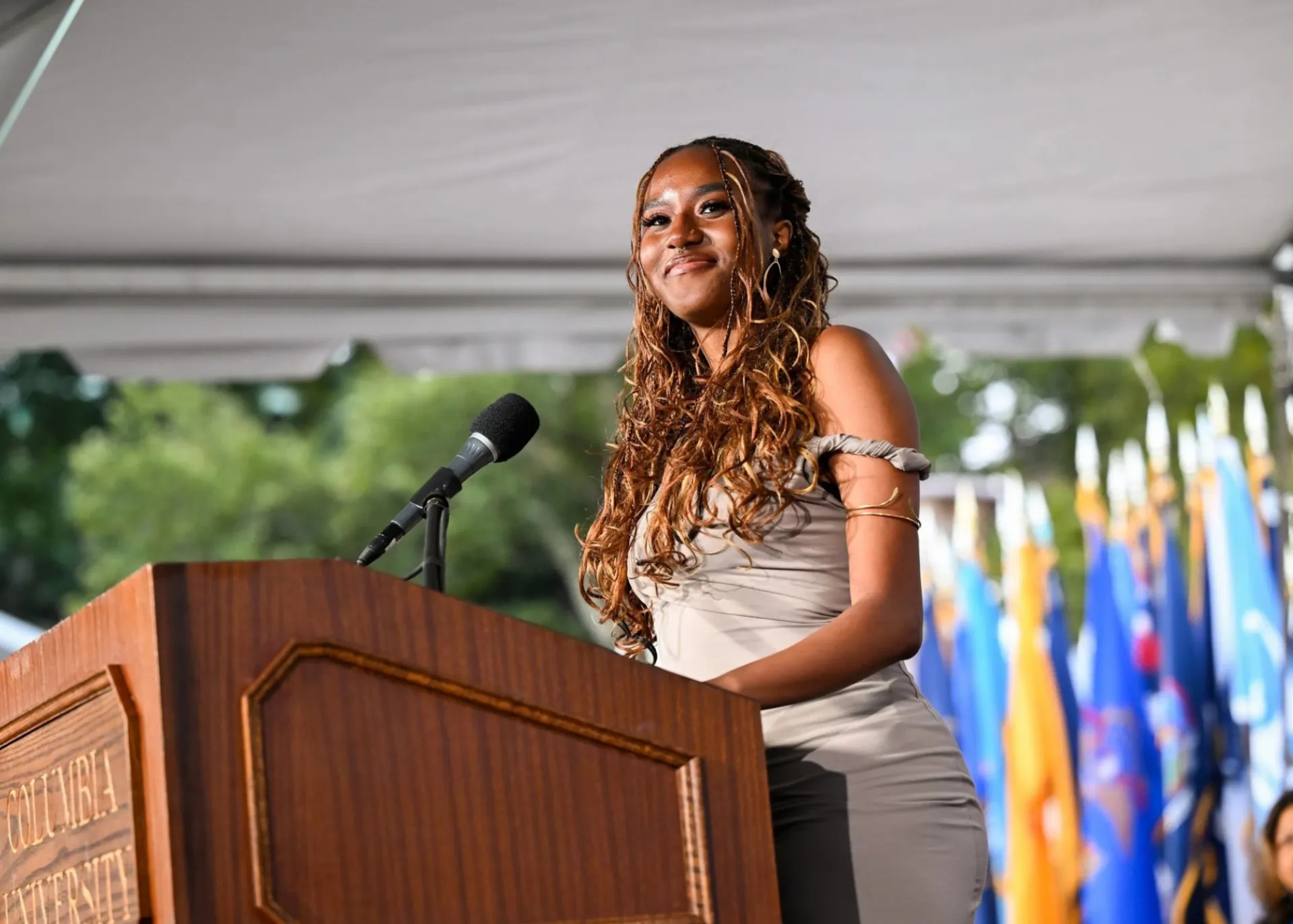
In which program are you enrolled and when is your expected graduation date?
Creative Writing, Human Rights Concentration
What is your research focus? What drew you to this particular issue/set of issues?
In an El Paso courthouse, Irvin Gonzalez stood before a judge, protective order in hand, her body still marked by the man who had tried to kill her. She had done everything right: bruises documented, forms filed, her trauma dissected for public record. But when the hearing ended, two ICE agents intercepted her. They didn’t need to ask her name—they already had it. Her abuser, ever resourceful, had tipped them off, weaponizing her legal status as easily as he did his fists. The protective order she clung to wasn’t a shield. It was a stage prop in a performance dressed up as justice, choreographed to fail.
Such is the perpetual predicament of the migrant survivor—urged to “reclaim” powers that never truly existed in the first place.
With immigration enforcement presence in airports, hospitals, churches, shelters, courthouses, and grocery stores, ICE enforcement has become increasingly pervasive across the South —gnawing on the foundation of safety survivors of abuse rely on. While abuse rates among immigrants reach as high as 49.8% (nearly three times the national average), almost 80% of these survivors admit fears of reporting their abuse.The case of Jaimar Bravo Gil who was burned alive by her abuser in Utah is a stark example.
Today's abusers know a woman with no language in the law is a woman who stays. And a country can finish what a man starts—an entire federal apparatus controlling one of our most vulnerable populations. This is the reality of an undocumented survivor of abuse—to be alien in love and in labor, in land and in law.
Which class would you recommend to other students interested in the same issues as you?
Power, Policy, and Procedure in Immigration Court
Where did you grow up? In which countries/areas?
Broward County, Florida!
What is a must-read for a human rights student?
As a proud poet, I'll share poems that inspire me to continue my work: Social Skills Training by Solmaz Sharif, Land of 10,000 Lakes by Ollie Schminkey, Won't You Celebrate With Me by Lucille Clifton
What has been your favorite moment in the program so far?
I was especially grateful for Professor Frank-Vitale's guidance in immigration court observation! Moreover, Professor Rosenthal's Advocacy Strategy class boosted my confidence in campaigns and messaging!
What are your goals (professional or academic) after graduation? Where do you see yourself in 10 years?
Post-grad, I'd like to work in social impact for 1-2 years before law school, growing my literary career and audience. Later in life, I'll be in non-profit or philanthropic leadership, at the intersection of domestic violence, immigration rights, and child advocacy. I have a special love for community, logistics, policy, and performance, and hope to appreciate all those areas in my lifetime.
What is your favorite spot to study (or spend time) on campus?
Butler is a wee bit intimidating—I like to cosplay as a 'Barnard Baddie' and sit in Milstein, or visit the USL Staff in Lerner.
What is your hometown/area famous for?
Miramar, FL is exuberantly Caribbean—it's close to the source! I'm perpetually inspired by the accents, proverbs, and traditions I experience, from Jamaica to Cuba. Broward County also raised a beautiful loc culture, as well as iconic rappers such as XXXTentacion, Kodak Black, Lil Pump (he went to my high school) and more.
If you were to start a bookclub, which book would you choose? Why?
In the Dreamhouse by Carmen Machado carries an aspirational level of grief, historical knowledge, and literary command. It's a vignette-style, hybrid-nonfiction book that details a queer abusive relationship. Machado is among many of the writers I'm studying as I work on my memoir!
Anything else you wish to share about yourself or your experience in the program/Columbia so far?
Shnayjaah Valentine Jeanty is a nationally recognized poet and activist with a lived interest in law/policy that intersects immigration justice with domestic violence prevention. A Columbia University senior studying Creative Writing & Human Rights, she serves as the National Domestic Violence Hotline's 2025 Youth Activist and is the 2024 National Youth Poet Laureate of the South. Her work has been featured at the Kennedy Center, before Congress members, and others. She is a 2025 Beyond the Bars Fellow. Shnayjaah enjoys social impact/justice and philanthropy roles. She is currently crafting her third book (a memoir), while in the publishing process of her poetry collection, Hollowed By Help, which releases in April 2027 with Write Bloody Publishing. Shnayjaah is mostly known for her laughter and making too many friends on the subway.