
Summer Certification of Professional Achievement
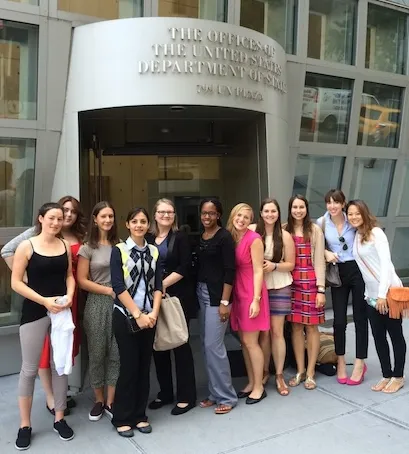
The Summer Certification of Professional Achievement in Human Rights (CPA) is run by ISHR in conjunction with the School of Professional Studies. The CPA is ideal for professionals, graduate students, and advanced undergraduate students wishing to further their knowledge and understanding of human rights.
Students in the CPA include those seeking to complement their training in other fields or disciplines, such as law, public health, or fundraising, development, etc.; individuals with academic or professional experience in human rights wishing to obtain more specialized knowledge through graduate-level study; and students preparing for further graduate study. The Program emphasizes the interaction between human rights theory and practice, and offers students the opportunity to learn from human rights practitioners through in-class guest lectures. Courses are offered at the graduate level for academic credit.
In order to receive the certification, students must complete the following requirements:
- Introduction to Human Rights - HRTS S4020
- International Human Rights Law -HRTS S4220
- Two elective human rights courses
Students must successfully complete 12 credit points of coursework with a grade of C or higher and obtain a minimum GPA of 3.0 to obtain the CPA. The certification program may be completed in a single summer or two consecutive summers.
Courses are open to non-degree, degree, and visiting students. Students enrolled in Columbia degree programs are not eligible to apply for the certification, however they may still enroll in summer courses. Previous coursework or knowledge of human rights are not required.
Summer Certificate Highlights

"I designed my course on Indigenous Rights and Settler Colonialism in North America because I wanted to explore with my students the intersection of grassroots anticolonial movements and the international human rights apparatus in purportedly liberal, 'rights respecting' countries like Canada. I am fascinated by how these states simultaneously recognize and resist rights claims, and how anticolonial aspirations fit uneasily within a rights imaginary. Finally, I feel that it is important for students at Columbia to have the opportunity to study struggles for justice that are not just global and elsewhere but very much local and 'here'."
- Dr. Tim Wyman-McCarthy, ISHR Lecturer and Associate DGS.

"Summer courses motivate faculty to re-imagine their teaching, and to experiment with methods that would be ineffective in a regular course. For example, a 6-week summer course is not long enough to assign a research paper, but it is enough for 'solutions research' projects where students evaluate and compare different approaches tried when addressing similar events or issues. This comparative analysis gives them opportunities to hone in their analytical skills and to become acquainted with the context of the problem."
- Dr. Tracey Holland, ISHR instructor

"The Human Rights program is different from other studies because it focuses not only on the theory and the scholarly aspect, but also on real-world application. Our class was a mix of students from different professional and academic backgrounds, and we learned as much from each other during class discussions as we did from the readings. We also had frequent guest speakers - our professor's colleagues and other experts who were able to answer questions about the practical manifestation of human rights in field work. The coursework, while weighty, never felt inapplicably abstract."
- Erin Tolman, student in the Summer Human Rights Program.