
By The Numbers*
39
Incoming Class Size
84%
Full-Time
32%
International Students
22
Languages
15
Countries
70
Enrolled Students
As the focal point for the study of human rights at Columbia University, ISHR offers exceptional education programs that draw on its decades of training human rights professionals, producing innovative research, and advancing the study of human rights theory and practice.
The Institute takes a liberal arts approach to human rights education that is historical, interdisciplinary, critical, and intersectional. The teaching and research done at ISHR go beyond a narrow focus on the United Nations framework and formal international machinery to recognize the role of people(s) and social justice movements in shaping human rights thought and practices.
Our Approach
By critical human rights study, we mean scholarly approaches that move beyond the mere affirmation of human rights orthodoxy to examine the contradictions, paradoxes, limitations, and power relations that shape human rights ideologies, practices and institutions.
We consider the study and practices of human rights and social justice to engage with, among other topics:
- Problems of exclusion, discrimination, inequality, and forms of violence (physical, structural, environmental, socio-cultural);
- Practices of grassroots social movements, social justice activism, resistance, and struggle;
- Visions of accountability, justice, emancipation, and reconciliation;
- Theories, histories, and critiques of human rights norms, ideals, and practices;
- National, international, transnational, and regional laws, norms, institutions.
Generally, an academic human rights inquiry should go beyond a report or policy brief to engage critically with a tension or gap between two or more relevant positions, actors, or frameworks. It can also take the form of an empirical or conceptual puzzle that requires explanation.
Human rights research questions can also explore the potentially conflicting ways different actors conceptualize social and political change, justice, or emancipation. These questions sometimes also look to data to identify and explain surprising trends or inconsistencies.
Other forms of questions include theoretical inquiries that require the close analysis of bodies of scholarship, schools of thought, or popularly circulating arguments—as well as historical questions that require the analysis of different versions of human rights ideas and policies from the past and how they relate to the present.
Human rights thesis research by our M.A. students involves a range of methodologies. Some students undertake human subjects research, such as interviews, ethnography, participant observation, focus groups, and surveys, while others pursue discourse analysis, doctrinal legal analysis, archival research, interpretive or humanistic inquiries, as well as visual and spatial analysis and techniques for documenting experiences, practices and violations.
All students in the M.A. program develop specialized knowledge through the completion of a thesis project - a substantive text of original research or analysis that requires the critical examination of a human rights research question, related to the student’s selected concentration. Examples of theses produced by HRSMA students can be viewed here.
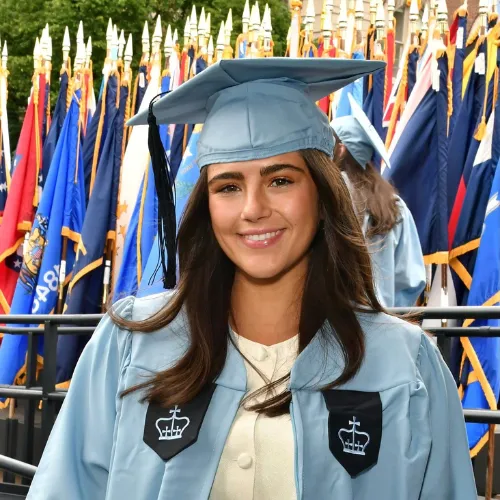
"We’ve been challenged by brilliant classmates and professors to think in new ways and question our assumptions. We’ve studied the ways international law works—and the many ways it fails. We've debated whether the human rights framework is sufficient or needs a complete revitalization. The Institute for the Study of Human Rights has given us the tools to shape our purpose through academic exploration."
- Elena Cata, HRSMA Alumna
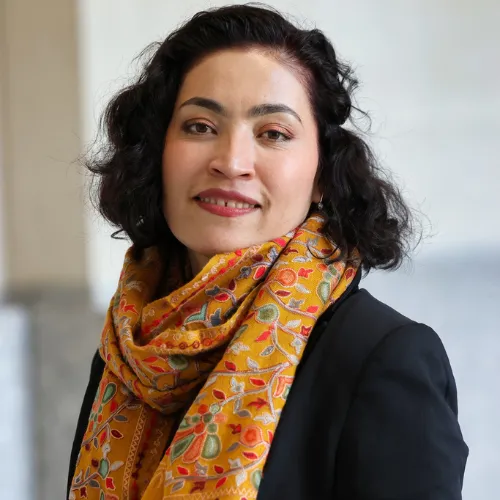
"This university — especially the Institute for the Study of Human Rights— is where I first learned to expand my understanding of the human rights ecosystem... It was here that I first realized the power of knowledge—not just to illuminate the mind, but to stir the soul, to spark change, to dare to make a difference."
- Gaisu Yari, HRSMA Alumna

“In this program you will read some of the most profound life-changing materials of your academic career, learn from the world's leading human rights scholars, and befriend inspirational and ambitious human rights advocates - your peers. Studying and advocating for human rights is one of the greatest privileges."
- Brittney Bringuez, HRSMA alumna
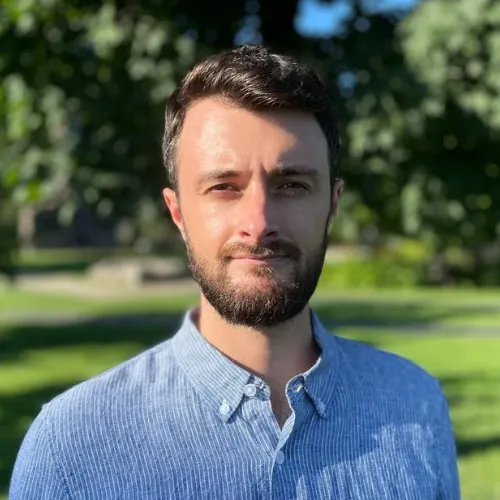
"This program presents not just great opportunities to broaden your knowledge and examine issues through a new lens but also encourages you to see the responsibility of undertaking a research project on human rights. My interviewees were keen to participate and eager to see the results of the research. It was a real responsibility – to listen, learn, analyze and produce accurate findings in a complex context."
- Lawrence Robinson, HRMSA Alum

"When I came to Columbia I anticipated excellent professors and scholars, access to an abundance of books and other academic sources and brilliant students I can learn from everyday. All of this turned out to be true. What I wasn't prepared for was the solidarity and support I have felt from the people in my cohort."
- Céline Pfister, HRSMA Student

“My peers' diverse perspectives and unwavering dedication have profoundly influenced my understanding of human rights. Engaging in thoughtful discussions and collaborative projects with such a talented and supportive group has deepened my knowledge and inspired me to strive for meaningful change. I am eager to see the significant impacts we will make in the field of human rights, driven by the collective energy and commitment we have cultivated together.”
- Sky Lingo, HRSMA Alumna
Career Outcomes

HRSMA alumni pursue careers in the United States and around the world, working in positions as wide-ranging as research, policy, advocacy, programs, grassroots organizing, and online trust and safety, among many others. Their skills and expertise drive the work of organizations in all sectors - from NGOs, UN agencies, and governments, to think tanks, philanthropies, social movements, and educational institutions, to the private sector. Alumni are a valued and engaged part of the ISHR community, running workshops, sharing career advice, and serving as mentors to current students and recent graduates.
Alumni Placement by sector
40.6%
Non-Profit/NGOs
19.7%
Government/Public Interest
21.7%
Business/Private Sector
10.2%
Further Graduate Studies
3.1%
Higher Ed Administration
2.4%
K-12 Education
2.3%
Academia
How to Apply
Detailed information regarding the application requirements and deadlines for the program are available on the GSAS website. We encourage you to carefully review the GSAS Frequently Asked Questions page, as well as the FAQs section on the bottom of this page.
Questions regarding Slate (the GSAS application management platform), the admissions process, and documents verification should be directed to the GSAS Office of Admissions at [email protected].
Connect with the HRSMA Program
Frequently Asked Questions
What We Look For
Successful applicants demonstrate a genuine interest in the study of human rights and social justice, an academic capacity to succeed in a rigorous graduate-level program, and the self-motivation and maturity to make the most out of their academic studies. HRSMA candidates are not required to identify a specific research question in their application materials, but they are encouraged to discuss their motivations for studying human rights, any relevant lived, practical, or academic experience, as well as how they see the program connect to their future career goals.
Successful applicants come from a variety of backgrounds and applicants can demonstrate their ability to succeed in a graduate-level program through a range of experiences. Some students enter the program with several years of professional experience; other applicants have more recently completed their undergraduate degrees. While an increasing number of students have studied human rights at the undergraduate level, the academic backgrounds of our students are varied. Students who get the most out of the program are able to apply the knowledge, skills, and perspectives they have acquired through a wide diversity of experiences, and are professional and proactive in their studies.
Applying to the Program
Successful applicants must have the academic skills to meet the demands of a graduate-level program, but there is no minimum GPA eligibility requirement. We consider the student's overall academic performance and the grades received in individual courses. We also consider other aspects of the application, such as letters of recommendation, CV, personal statement, writing sample, and GRE scores (if submitted). If extenuating circumstances influenced your academic performance, please feel free to submit additional information in your application explaining your situation.
The writing sample should be an academic piece (for example, a seminar paper) which demonstrates an applicant’s writing, analytical, and research skills. Professional writing, such as legal briefs, NGO reports, or policy/advocacy recommendations, should not serve as the applicant’s primary writing sample, but can be submitted as additional materials. Applicants are not expected to have completed academic coursework in human rights and as such, the writing sample does not need to focus on a human rights issue.
Submission of GRE scores is recommended, but applicants won’t be penalized for choosing not to do so . GRE scores can contribute to a more thorough and accurate understanding of your academic ability. If you decide not to submit them, you can ignore the “test scores” section in the GSAS application unless you also need to submit TOEFL scores.
The Graduate School of Arts and Sciences (GSAS) requires that all international students whose native language is not English and who have received an undergraduate degree from an institution in a country whose official language is not English must submit official scores of the Test of English as a Foreign Language (TOEFL) or results of the International English Language Testing System (IELTS). For additional information on score requirements, please go to the GSAS International Students page.
International students must enroll full-time every term with the exception of their third and final semester of study to maintain their student visa. For more information about attending Columbia as an international student, please visit the International Students and Scholars Office website.
Students should also consult the GSAS International Students page.
All students admitted during a given year must begin the program in the fall. The HRSMA program does not have a spring-start admissions cycle. Information on the admission deadline is available here. Admissions decisions are typically released by early May. The GSAS Admissions Office notifies students of admissions decisions as soon as they are available. Applicants will receive an email notification, but students may also check the status of their application by logging into Slate - the online application system.
Structure and Degree Requirements
Please consult the requirements section of this website.
The program requires 30 credit points and the competition of 2 Residence Units. The M.A. is typically completed on a full-time basis over the course of three academic semesters (Fall, Spring, and Summer/Fall). Students interested in pursuing the degree part-time should carefully review the course schedule and consult with the department.
More information about course and registration schedules is available here. All students are required to enroll each semester, unless they are taking a leave of absence. Additional information about GSAS requirements is available here.
Your particular research interests and goals will evolve and become more specific as you progress through the degree. However, the more specific the concentration, the easier it will be to choose appropriate courses and decide on a thesis topic. Students who plan to complete their degree within three semesters should take at least one concentration course during their first semester of study.
The concentration is self-defined by the student in consultation with the HRSMA program’s academic advisors. Some students define their concentration more broadly, such as the human rights of women, and then become more focused as they progress in their studies. Other students begin the program with a more narrow concentration, such as women’s right to health in Southeast Asia. All incoming students will also meet with an academic advisor to discuss their concentration before they finalize their schedule for their first semester in the program. Please visit our Graduate Courses page for an overall list of courses that count towards the HRSMA degree, including possible concentration courses, depending on the student’s area of interest.
Students are also encouraged to attend extracurricular events, such as brown bags and lectures to learn more about various human rights issues that may be of interest. Our calendar has the most recently updated list of events.
There is no requirement to complete an internship, but many of our students choose to avail themselves of this opportunity as a way to enhance their experience in the program and gain valuable practical skills. Eligible internships may receive 1 academic credit, which can be counted towards the elective requirement for the degree. We offer a number of resources to support students who are interested in pursuing internships. Please see the Student Resources page for more information.
The HRSMA program is offered through Columbia University’s Graduate School of Arts Sciences and is run by the Institute for the Study of Human Rights, which is responsible for several human rights education programs at Columbia University. ISHR offers courses specifically for students in the program, but students in this interdisciplinary program may also take courses offered by other departments within GSAS and other schools at Columbia.
There are approximately 50-85 students in the program at any given time. While the incoming class size may vary, it averages around 35-40 students.
Student resources
The university provides a limited amount of housing for graduate students. Housing space is in high demand and is not guaranteed. Many students live off-campus. For more information about housing, please visit Columbia’s housing webpage. Students may also be interested in living at International House, which is open to both domestic and international students.
Would you like to learn more about the Human Rights Studies M.A. program, plus meet some of the faculty and staff at the Institute for the Study of Human Rights? Join us for our annual virtual HRSMA Information Session! To make sure you receive the event information, please fill out this form. If you would like to meet with the HRSMA program one-on-one, please use the scheduling tool in the section above to make an appointment.
Please contact the Visitor’s Center at (212) 854-4900 or [email protected] to arrange a self-guided tour of Columbia’s campus. A digital tour and map for a self-directed walking tour are available online.
Tuition and Funding
For information about the Residence Unit model and current cost of tuition and fees, please visit the GSAS cost of attendance webpage.
A select number of students receive partial merit scholarships. Students do not need to submit additional materials to be considered for these scholarships. ISHR offers competitive stipends for thesis research, internships, and conference participation, as well as different types of awards and prizes for current students. For more information, please see the HRSMA financial resources page and the GSAS financial aid website.
* Enrollment numbers reflect data from 2020-2025.