
Founded in 1989, the Human Rights Advocates Program (HRAP) is a unique and successful model of human rights capacity building. HRAP capitalizes on its affiliation with Columbia University and its location in New York City to provide grassroots leaders the tools, knowledge, access, and networks to promote the realization of human rights and strengthen their respective organizations.
HRAP’s comprehensive program of advocacy, networking, skills-building, and academic coursework provides advocates the opportunity to hone practical skills, develop a deeper understanding of human rights, and foster mutually beneficial relationships with organizations and individuals in their respective fields.
Since 1989, more than 350 advocates from nearly 100 countries have participated in HRAP.
Program Overview
After completing the intensive six-month program, Advocates are able to more effectively lobby for their causes and address the human rights concerns of their community. The comparative advantages of the Human Rights Advocates Program are its:
- Comprehensive program of academic coursework, faculty mentoring, skills-building workshops, and networking.
- Emphasis on individual and organizational capacity building
- Affiliation with Columbia University and location in New York
- Networking trip to Washington, D.C.
- Alumni body of more than 350 alumni in 100 countries
HRAP Pillars
The HRAP model is structured around four pillars: graduate-level coursework, skills-building workshops, networking, and mentoring. This multi-faceted approach enables advocates to strengthen their understanding of human rights and develop valuable new skills and relationships. The advocates are encouraged to transfer the knowledge, skills and networks gained during the program to their organizations and movements back home.
Through academic coursework, Advocates gain a deeper understanding of human rights and other fields that relate directly to their work. Participation in these courses exposes Advocates to alternative perspectives and gives them a more holistic understanding of human rights.
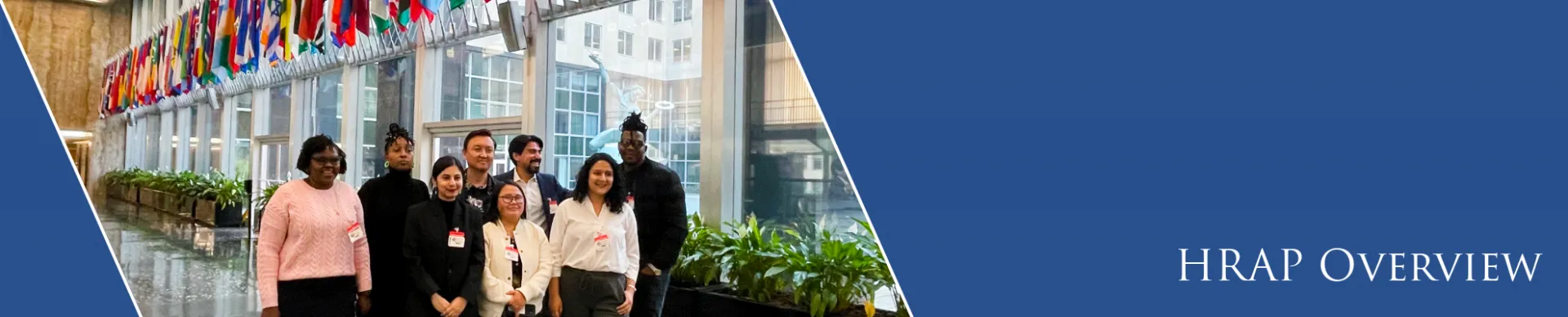
Advocates attend Columbia University seminars, tailoring the academic component of the Program to their interests. Advocates can participate in classes across the University, including at the School of International and Public Affairs, Columbia Law School, Barnard College, the Mailman School of Public Health, and Teachers College.
This program provides Advocates the opportunity to learn from expert practitioners through a variety of skills-building workshops and trainings. The skills-building component varies slightly each year according to the Advocates’ interests, but generally includes the following activities.
Fundraising & Building Sustainable Organizations
This workshop guides Advocates through the cultivation cycle of major-gift donors to ensure that fundraising efforts are strategic, streamlined, and effective. Advocates identify new funders, write and critique one another’s letters of inquiry and proposals, strengthen their communication skills with prospective donors, and submit proposals to foundations. Workshop sessions also focus on long-term planning, preparing strategic business plans, and other lessons that help Advocates improve the long-term sustainability of their organizations. The course includes both individual and group meetings and is designed to be hands-on and practically oriented in order to yield tangible results.
Human Rights Research, Documentation, & Reporting
Human Rights Watch senior researchers offer a six-week course on human rights research, documentation, and writing. The course includes the following topics: the conceptualization of research projects, interviewing victims and witnesses, interviewing perpetrators and accomplices, and writing. The course is modified each year to meet the specific needs and interests of the Advocates.
Editorial Writing
Advocates focus on writing effective op-eds in support of their human rights advocacy goals. Advocates finish the course with a well-edited op-ed ready for submission to local, national or international outlets.
Effective Presentations
The Advocates learn how to make concise and effective presentations on their work. The Advocates are encouraged to provide constructive feedback to one another in a supportive environment.
Stress Management
Advocates participate in a workshop that provides concrete skills in recognizing signs of stress, primary and secondary trauma, and post-traumatic stress disorder within themselves, colleagues, and the communities they serve. The workshop also provides Advocates with the opportunity to share their own experiences, learn ways to promote healthy work patterns for themselves and their colleagues, and effectively promote high staff morale.
Human Rights Advocacy
This course is designed to develop practical advocacy skills. Advocates become familiar with a variety of tools that they can apply to their respective human rights campaigns. The focus is on developing an advocacy strategy on a current human rights issue, including the identification of goals and objectives and appropriate advocacy targets and methods. Advocates also have the opportunity to explore broad-based human rights campaigns, use of the media, and advocacy with UN bodies, the US government, and the private sector.
Video Advocacy
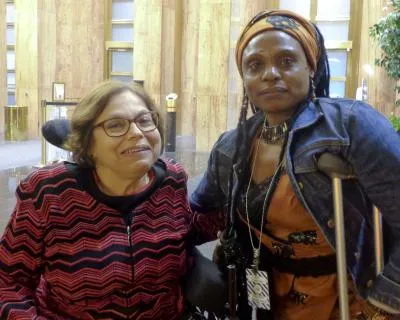
HRAP workshops are highly interactive
Advocates receive video advocacy training offered by WITNESS, a well-established NGO based in New York that uses video and online technologies to raise awareness with respect to human rights violations. They learn how video can play a vital role in advocacy campaigns without great expense or the involvement of video professionals.
Media Training
Advocates participate in a workshop on press and media work, through which they learn to develop press releases and cultivate media contacts. A key part of the training focuses on improving Advocates’ television interviewing skills through videotaped mock interviews and feedback sessions.
Maximizing Your Time in HRAP
2010 Advocate Bakary Tandia guides the advocates throughout the course of the program on how they can best maximize the HRAP experience.
Oral History
The advocates meet with oral history practitioners for an introduction to the field and to explore ethical considerations when working with precarious populations.
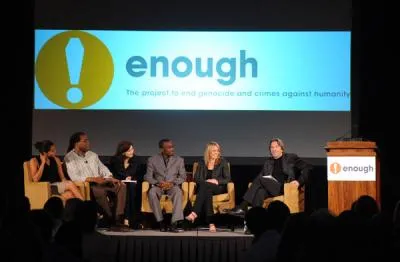
Advocacy networking allows Advocates to develop a range of contacts and foster relationships with relevant US-based organizations. These networking opportunities often lead to cross-regional collaboration and joint action.
Group Meetings
Advocates meet with a wide range of New York organizations that are actively involved in the Advocates’ issue areas of focus. Advocates learn more about various advocacy campaigns and strategies and develop a broad set of contacts. Advocates also share their grassroots perspective and knowledge.
Individualized Networking
HRAP also identifies and reaches out to US-based organizations whose work is particularly relevant to individual Advocates. Meetings with such organizations often lead to long-term collaborative relationships in the form of joint projects, information-sharing, funding, and the sponsorship of fellows or interns.
Washington, D.C. Meetings
Advocates also participate in an intensive networking and advocacy trip to Washington, D.C. to meet with relevant organizations, government agencies, and foundations. This trip includes both group and individual me etings. HRAP staff work closely with the Advocates in order to tailor their individual schedules to their specific needs and interests. Prior to the trip, Advocates also receive advice and feedback on their advocacy and fundraising strategies. Each year, this trip significantly contributes to the Advocates’ overall networking and fundraising success.
Raising Public Awareness
Advocates take advantage of public-speaking opportunities at universities, community groups, and other public fora in order to raise greater awareness and take advantage of fundraising opportunities.
Engaging Policymakers
The New York-based residency and the advocacy trip to Washington, D.C. enable Advocates to lobby policymakers. Advocates often meet with representatives from the United Nations, US government, World Bank, and others in order to advocate on behalf of their own organizations and communities and press for changes in law and practice.
During as well as after the six-month program, HRAP supports the work of its Advocates and facilitates collaboration among program alumni. HRAP works to promote ongoing exchange of information and best practices, stimulate dialogue on human rights trends and policies, cultivate networks, and encourage mutual support initiatives.
Faculty mentor advocates throughout the course of the program. Over the years, advocates have been mentored by faculty from the Mailman School of Public Health, the School of International and Public Affairs, the School of Social Work, and Columbia Law School. Faculty provide guidance to the advocates who use their time in the program to reflect on and map out their personal trajectories and work as human rights advocates.
Capacity Building
ISHR offers its capacity building expertise to Human Rights Advocates Program (HRAP) alumni and their organizations as well as to the human rights community at large.
Alumni
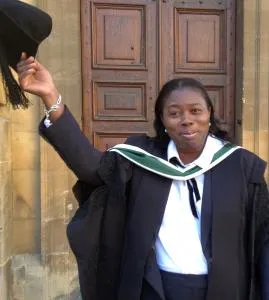
ISHR has continued to build the capacity of its advocates even after they leave HRAP. ISHR maintains a list of scholarship and fellowship opportunities which it shares with HRAP alumni. Since 2010, this support has led to HRAP alumni receiving scholarships to universities including Oxford University (Sylvester Uhaa and Susan Aryeetey) and Tufts (Bakary Tandia). HRAP alumni have been named to the Top 99 Under 33 Foreign Policy Leaders (Elvis Mbembe Binda) and as members of the Clinton Global Initiative (Peter Mulbah and Musola Cathrine Kaseketi).
Upon request, ISHR provides technical advice to HRAP alumni. Since 2010, ISHR has advised HRAP alumni on their grant proposals resulting in funding totaling $3 million for projects ranging from support for pro bono legal services for women in Ghana and Uganda to youth projects in the Balkans and Sudan.
Support Beyond Campus
ISHR has shared its capacity building expertise in both small and large settings. In 2017 and 2018, ISHR organized workshops at the UN Committee on the Status of Women and the Permanent Forum on Indigenous Issues. Upon request, ISHR has designed and led workshops for smaller groups of human rights advocates visiting New York City.
ISHR works with HRAP alumni to make their considerable expertise available to the public. On the HRAP Channel on YouTube, HRAP alumni have shared their knowledge in videos that are easily accessible to those interested in human rights.
ISHR has introduced HRAP participants to publishing opportunities. James Aniyamuzaala and Akinyi Ocholla have published in the Journal of Human Rights Practice (Oxford). Their articles can be access here (Aniyamuzaala) and here (Ocholla).
In honor of HRAP’s 30th cohort, ISHR worked with the advocates on a series of reflections that highlighted the strategies, tools and ethical considerations that have contributed to their human rights advocacy over the years. HRAP alumni including Delphine Djiraibe of Chad, Samuel Kofi Woods of Liberia and Alejandra Ancheita of Mexico contributed.
We welcome and appreciate your support.
If you wish to donate to the Human Rights Advocates Program, please use the button below and follow the instructions on the Columbia Giving donation portal.