
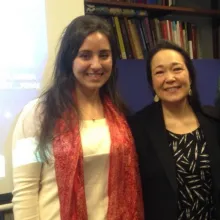
Columbia Alumni Reflect on HRAP: Caroline Fidan Tyler Doenmez
In honor of HRAP’s 35th anniversary, ISHR has asked Columbia University alumni to share their recollections of the program. The first alumnus to be featured is Caroline Fidan Tyler Doenmez who earned the HRSMA from ISHR in 2015.
It would be difficult to overstate the impact that my time at Columbia had on my life trajectory. I arrived there in the fall of 2013 excited, anxious, and unsure of exactly who I was trying to become. One of the major formative elements of my time there that helped my sense of self come into focus was my involvement with the Human Rights Advocates Program (HRAP).
I began working with HRAP in 2014 as a Program Assistant, and then served as Program Coordinator in 2015. First and foremost, I valued the connections I formed with my supervisor, Stephanie Grepo, and Irene Atamian both of whom taught me so much and gave me a sense of community at Columbia. My involvement in HRAP was a generative and edifying experience of building relationships with front-line human rights advocates from around the world. Through them, I became newly aware of various human rights issues impacting people in Greenland, Albania, Turkey, South Sudan, Australia, India, and the Congo, among other locations. I helped to arrange visits with various human rights institutions and organizations with the cohort in both New York and Washington, D.C., and to support them in building international networks and solidarities. These advocates embodied courage and commitment that showed me the meaning of enacting the principles of human rights I was learning about in my classes in their daily lives. It also emphasized the stakes of this kind of work, as many advocates took considerable risks to advance their causes in dangerous contexts. Encountering these advocates’ stories helped to foster one of my central areas of scholarly interest that continues to animate my research to this day: how people translate their visions of a better world into action and create their own forms of justice within their communities.
These lessons I was learning from the advocates themselves resonated with my academic studies at Columbia. I was lucky enough to take courses with Professors Elsa Stamatapoulou, Audra Simpson, and Lila Abu-Lughod, all of whom had a tremendous influence on my development as a critical thinker and ethnographic researcher. It was in these classes that I learned of the crisis of missing and murdered Indigenous women, girls, and two-spirit people (MMIWG2S) for the first time, catalyzing my subsequent graduate research. I conducted fieldwork in Nova Scotia and Winnipeg in 2015 for my M.A. thesis, “Already Disappeared: Interrogating the Right to Life of Indigenous Women in Canada.”
I then went on to continue my graduate education at the University of Minnesota, under the guidance of my advisors and committee members Hoon Song, Jean O’Brien, Jean Langford, and Juliana Hu Pegues. Between 2017-2020, I conducted additional stints of ethnographic fieldwork in Winnipeg with MMIWG2S advocates, Indigenous doulas and midwives, water walkers, and artists. When my research was interrupted by the pandemic, I returned to the U.S. and, like many others in my graduate cohort, adapted to conducting “virtual ethnography” through online interviews and attending online events for the next two years. In June 2023, I defended my dissertation, “Carrying Water: Indigenous Women Reclaiming Birthing Sovereignty along the Red River” and graduated with my Ph.D. in anthropology with a graduate minor in American Indian and Indigenous Studies.
Only two weeks after defending my dissertation, my husband and I stuffed our car to the brim with boxes of books, clothes, a bouquet of lavender from our neighbor, a guitar, and our 1-year-old son Leo. We drove from New Hampshire, where we’d been based at Dartmouth College, to East Lansing, where we both began new jobs as professors at Michigan State University. I am currently teaching here in the Department of Anthropology and affiliated with the Center for Gender in Global Context.
I am so grateful for my formative experience with HRAP and think of everyone there often. I hope to reconnect with the HRAP staff and 2015 advocates again one day soon.
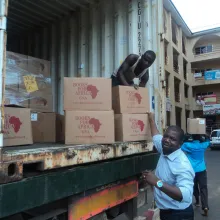
Columbia Alumni Reflect on HRAP: Jaclyn Sawyer
In honor of HRAP’s 35th anniversary, ISHR has asked Columbia University alumni to share their recollections of the program. The fourth alumnus to be featured is Jaclyn Sawyer who earned a MSW in Social Work and Policy Practice from the Columbia School of Social Work in 2015. Jaclyn is the Associate Vice President of Data Strategy at Breaking Ground and a Lecturer at the Columbia School of Social Work.
I first learned of the Human Rights Advocates Program (HRAP) in 2013 when I was a graduate student and one of the few lucky Americans living at International House. I was studying public policy and social work at Columbia University, and part of an incredible community of graduate students from across the world, areas of study, and educational institutions. That year I had the privilege of getting to know a cohort of human rights advocates, finding inspiration and overlap in our collective advocacy work. One of the advocates, Sylvester Uhaa, and I found particular resonance in each other’s work, both dedicated to justice reform. We found common cause in our efforts to promote the dignity and humanity of anyone interacting with justice systems and advocacy to reduce the incarcerated population. We learned from each other’s experiences in New York and Nigeria, and went on to develop a project to support Sylvester’s work at home and establish libraries and educational programs within Nigerian prisons.
Together, we facilitated the delivery of 22,000 books to Nigerian prisons, and developed methods to measure the impact of educational programming within prisons on recidivism rates and positive reintegration outcomes. Despite some hurdles along the way, the project progressed from planning to execution, laying the groundwork for educational initiatives within the prison system. This project still inspires me in the power of finding shared goals in work executed across cultures and circumstances, and the power of building these relationships to bring capacity to the collective work and strengthen grassroots efforts.
Since that work in 2014, I have forged my career in building data capacities in human rights and social justice endeavors. I have helped numerous non-profits learn what data they have and the stories it holds, exploring how they can leverage small data in thoughtful ways to further their mission. I have stayed connected to higher education institutions to cultivate these spaces where people and ideas come together to develop novel, shared solutions that can’t be developed alone. As a lecturer at Columbia University, School of Social Work I developed a course called Advocacy in Emerging Tech, Media, and Society that prepares students across disciplines to leverage their skills in the emerging tech landscape and engage with the pressing issues of human rights in the digital age. In this capacity, I’ve been able to stay connected to the HRAP program year after year, meeting the new cohorts and hosting workshops on data-based advocacy.
In the digital age, human rights advocacy is undergoing a profound transformation, as technology shapes both the challenges and opportunities for activists. I am thrilled to continue to be connected to HRAP and be able to explore new tools and approaches with advocates and learn how the work is adapting in new environments. There is an urgent need for collaboration between technologists, policymakers, and civil society to uphold human rights in the digital realm and HRAP has provided an inspiring avenue for initiating these connections and collaborations, strengthening and upholding practitioner networks across the globe.
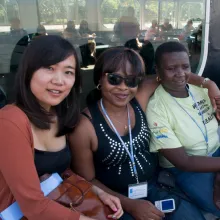
Columbia Alumni Reflect on HRAP: Junghwa “Sam” Lee
In honor of HRAP’s 35th anniversary, ISHR has asked Columbia University alumni to share their memories of the program. The final alumnus to be featured in this series is Junghwa “Sam” Lee who earned a master’s in International Development Education from Teachers College in 2012. She is a learning design expert at McKinsey & Co.
My journey began as a graduate student, from Seoul, South Korea, stepping onto the bustling campus of Columbia University, with a heart full of dreams and a somewhat lofty ambition to make a change in the world through education. My graduate studies in international educational development focused on learning design and program approaches within an international development context. I thought I could 'save the world' one lesson at a time—classic graduate student optimism.
However, my defining professional experience unfolded during my participation in the Human Rights Advocates Program (HRAP) at Columbia University in 2011. As the capacity building program coordinator, I was responsible for planning and delivering workshops and fundraising events for 12 Human Rights Advocates, collaborating with Columbia faculty and industry partners in New York. I also managed their week-long field trip in Washington D.C., organizing hands-on professional sessions with human rights organizations. This marked my first professional chapter in the city and transformed me from an eager graduate student to a professional deeply committed to empowering global leaders.
Under the mentorship of Stephanie Grepo, I gained invaluable insights into program leadership and education. Her guidance was not only foundational in shaping my work ethics and practices but also ingrained a deep-seated commitment to leadership and education in me. Working alongside her offered me a hands-on apprenticeship in effective program management and leadership.
Deepening relationships with HRAP Advocates both during and after the program broadened my worldview. Discussions and workshops with Advocates from diverse backgrounds exposed me to the varied and complex challenges that different global populations face–from protecting women’s rights in post-conflict regions to navigating the challenges LGBTQIA+ communities encounter worldwide. These interactions were more than educational; they served as a repository of rich, real-world stories of resilience and growth. The post-program successes and enduring changes enacted by my Advocate friends in their communities profoundly inspired me.
This immersion was instrumental in uncovering the critical need for upskilling and providing platforms for these global leaders to realize their professional and personal aspirations. It reinforced my role in creating learning opportunities that catalyze transformative change, steering me towards designing learning programs tailored to the unique needs of leaders and organizations. HRAP thus became a pivotal moment in my career, laying the foundation for my mission to empower global leaders for their future.
Following HRAP, my journey continued with roles at the United Nations and various INGOs, where I focused on developing learning programs that addressed the multifaceted challenges confronting our world today. This chapter was instrumental in shaping my commitment to building lifelong learning programs for busy professionals worldwide, driven by firsthand observations of global adversities.
My journey then steered towards learning innovations and technologies, starting at Columbia Business School’s digital executive education programs and subsequently at an EdTech company. There, I leveraged product methodologies and cutting-edge technologies to craft learning solutions that cater to the unique needs of working professionals and their organizations, challenging the 'one-size-fits-all' approach to professional development. Currently, as part of the learning design and innovation team at a global firm, I continue my quest to empower leaders from all parts of the world with the digital and technological leadership skills necessary to navigate future disruptions.
As we celebrate the 35th anniversary of HRAP, I look back on my journey with immense gratitude and pride. From contributing to the program's 25th-anniversary logo to being a proud working mom of a six-year-old son, my path is a testament to the transformative power of learning, leadership, and HRAP's enduring legacy.
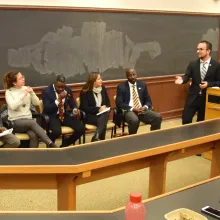
Columbia Alumni Reflect on HRAP: Nicholas Anthony Perez
In honor of HRAP’s 35th anniversary, ISHR has asked Columbia University alumni to share their recollections of the program. The third alumnus to be featured is Nicholas Anthony Perez who earned a master’s degree in human rights and humanitarian policy from the School of International and Public Affairs in 2018. He is the Program Manager of Free Expression and Education at PEN America.
Imagine applying to “work study” positions expecting an ordinary office job, and then discovering the most catalytic opportunity ever. What other “work study” job allows a grad student in human rights policy to work alongside grassroots advocates from around the world by helping them navigate and network with over 100 global human rights organizations? The Human Rights Advocates Program (HRAP) bolstered by Stephanie Grepo’s inspired leadership radiates such progressive magic despite such challenging times, and I can confidently say that my time there between 2018 and 2019 supercharged my career in ways I would have never envisioned possible.
During my time working with Stephanie and HRAP, my main responsibilities included facilitating strategic networking coordination between the resident advocates and human rights agencies across New York City and Washington, DC. Every day I would oversee communications with dozens of organizations that the advocates had demonstrated interest in connecting with, including United Nations agencies, nonprofit advocacy groups, and donor foundations. I would schedule networking meetings for the advocates to visit these organizations in person, and then I would have the opportunity to visit the sites alongside the cohort to observe real-world human rights advocacy and dialogue taking place. As a student in Columbia’s School of International and Public Affairs, it was one thing to study human rights issues and principles in class, and another thing entirely to actually visit the agencies themselves alongside real changemakers who were there to have serious conversations of impact and consequences. Immersing myself in this real-world advocacy enabled me to grasp the nuances and intricacies of the field firsthand, making my academic studies feel all the more tangible.
Beyond the highly practical networking skills I learned during my time with HRAP, Stephanie also encouraged me to enjoy the work by exploring and integrating my passions for graphic design, photography, videography, and copyediting. One of my favorite projects was drafting a Networking Coordination Manual for future work-study students to advise on best practices when coordinating and maintaining outreach to human rights organizations. I designed the entire doc on Canva using explanatory screenshots, photos, and brightly colored clip art that continues to provide useful advice even to this day. Additionally, Stephanie also asked me to create the 30th Annual Alumni Survey Report which I also designed on Canva in order to embed ample photos and add colorful survey result charts and graphics that could hopefully do justice to the immense energy and impact brought to the program through the various advocates that have participated over the years. Seeing that I had an eye for design, Stephanie also invited me to be the advocates’ official photographer, which led to all of us having way too much fun taking prom-style group photos in front of Low Library, and individual power shots in front of Butler Library that still adorn many of the advocates’ LinkedIn profiles today. Lastly, I was also able to return to HRAP after graduating to interview a new cohort of advocates on video and then provide edited sequences for YouTube that the advocates and Program could use. That project was also such a joy to create, as I was able to meet and converse with the advocates directly, molding their responses into captivating videos that would be used to amplify their inspiring stories and missions.
The experiences and skills gained during my time working with Stephanie and the advocates remain invaluable in my current role as the Program Manager for Free Expression and Education at PEN America. At PEN America, I spearhead human rights advocacy education programs, focusing on freedom of expression, for high school and college students. I have invited many HRAP alumni to come and speak to our students including Solomon Collins Nkulinga, Daniel Alejandro Pinilla, Bakary Tandia and others. My networking skills also now come in handy tremendously as I build and promote courses and summer programs for students, making me always reflect on my time reaching out to organizations for HRAP. Furthermore, I always try to have fun with my work as I did while supporting HRAP, embracing my passions for design, content creation, and relationship-building. I'm deeply grateful to Stephanie and the Institute for the Study of Human Rights for jump-starting my career in human rights advocacy, and I eagerly anticipate meeting new advocates and witnessing the continued growth and impact of the program!

Columbia Alumni Reflect on HRAP: Rose Anderson
In honor of HRAP’s 35th anniversary, ISHR has asked Columbia University alumni to share their recollections of the program. The second alumnus to be featured is Rose Anderson who earned the HRSMA from ISHR in 2014.
I worked with the Human Rights Advocates Program from 2013 to 2014, while I pursued my MA in Human Rights at the Institute for the Study of Human Rights (ISHR) at Columbia. I knew the HRAP program from my previous stint at WITNESS, a human rights nonprofit based in Brooklyn. There, I had the opportunity to meet with HRAP Advocates in 2012 to present WITNESS’s work in training and disseminating best practices among activists and advocacy groups seeking to use video as a human rights tool. I was immediately impressed with HRAP and the vital human rights work being conducted by the Advocates in their respective home countries.
When I joined later HRAP in 2013, I had the pleasure of conducting and editing video interviews with Advocates from Nepal, Guatemala, Nigeria, Uganda, Zambia, Liberia, and South Sudan, which gave the Advocates a chance to share more about their human rights work and inspiration. I also set up the program's YouTube channel so these kinds of interviews could continue for the cohorts to come. I later became the Program Coordinator for 2014, and had the chance to see an entire full cycle of the HRAP program, from the incoming applications for the 2014 cohort, to later preparing for these Advocate's arrival in the Fall semester. In my role I participated in the orientation sessions, set up informational meetings and skills-building sessions for the Advocates with local human rights nonprofits, and prepared for the Advocates’ networking trip in DC to meet with nonprofits and funders relevant to their areas of work.
One memory that has stuck with me was taking a few of the Advocates to the Social Security Office in Manhattan and realizing how challenging these kinds of bureaucratic processes can be to newcomers, especially when these steps need to be taken almost immediately after landing in a new country, something that I have kept in mind in my current work supporting threatened scholars who are also newcomers to their respective locations and figuring out new systems. I remember also being impressed by how quickly the Advocates, not knowing each other beforehand, came together as a group, and witnessed many occasions where members of the group would lift one another up, whether to highlight an aspect of their colleague’s work they may have been too humble to share, or simply to help each other navigate their new city and get to the various meetings on time. There was a lot of mutual learning, and a lot of laughter, too.
I’ve been continually impressed by Stephanie Grepo’s dedication to the program. She and the selection committee carefully select each cohort, secure funding for each respective visit, and immediately begin preparations for the Advocates’ arrival, from visas to flights to accommodations. (HRAP was my first introduction to the J-1 visa, a process I now know well.)
The program requires year-round effort though each visit is a semester long, and Stephanie leads the work and drives the program forward with admirable dedication, intention, humor and a deep respect for the program’s commitment to giving additional tools to these Advocates doing vital human rights work in their countries and regions. It was an honor to work with the program and to meet Advocates making such significant contributions to the protection and promotion of human rights around the world. I wish HRAP many more decades of success.
Rose Anderson, HRAP Coordinator 2013-2014
Rose is now the Director of Protection Services at Scholars at Risk, a network that serves to promote academic freedom and protect threatened scholars. Rose graduated with an MA in Human Rights Studies from the Institute for the Study of Human Rights in 2014.
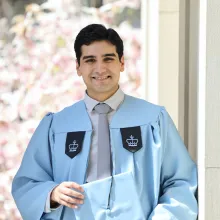
Columbia Alumni Reflect on HRAP: Victor Jandres Rivera
In honor of HRAP’s 35th anniversary, ISHR asked Columbia alumni to reflect on their experience with HRAP. Victor Jandres Rivera who is about to graduate from Columbia wrote about serving as the most recent HRAP program coordinator.
I applied to become a Human Rights Advocates Program Assistant during my junior year of undergrad. As a human rights and ethnicity and race studies double major, I jumped at the opportunity to engage with the human rights activists that the Institute for the Study of Human Rights (ISHR) invites from around the world. Now that I am one month away from graduating, I am happy I made that leap and applied to work with Stephanie Grepo on HRAP. The past two years working for HRAP have been informative and inspiring beyond what I could’ve imagined when I decided to work for ISHR. My work has allowed me to engage with human rights activists fighting for LGBTQ+ rights in Brazil, women’s rights in Kenya, racial justice and civil rights in the Dominican Republic, disability rights in Nepal, and numerous other human rights efforts across the globe. My human rights courses have taught me about human rights mechanisms and theories, but my work with HRAP has exposed me to countless intersectional and grass-roots human rights initiatives that have inspired me to continue pursuing human rights work.
Working one-on-one with the advocates has been an invaluable experience, and I have felt immensely privileged to have had the opportunity to meet each and every one of the HRAP members these past two years. I’ve learned what it means to be a human rights defender and the importance of coalition-building and fighting to forge a better future where human rights are universally respected across the world. Next year, I will attend Yale Law School in pursuit of becoming a lawyer and hope to continue advocating for human rights after my time at Columbia comes to an end.