
Alliance for Historical Dialogue and Accountability
Overview
The Alliance for Historical Dialogue and Accountability (AHDA) brings together scholars, students, civil society organizations, journalists, educators, artists, policy makers, and others who work on historical dialogue issues in conflict, post-conflict and post-dictatorial societies. These individuals address the political ramifications of the historical legacy of conflicts, as well as the role and impact of the memory of past violence on contemporary politics, society and culture.
The variety of activities and work that the AHDA program supports and develops reflects the fact that historical dialogue takes place in a variety of fields ranging from journalism and education to history and new media. These disciplines all contribute to the goals of historical dialogue, namely, enhancing public discussion about the past; understanding the uses and misuses of history; and creating a framework in which communities can reflect, share and debate their past in the quest for reconciliation and a more democratic future.
Fellowship for Historical Dialogue and Accountability
*Please note: We are not accepting applications for the AHDA Program. For more information about the Historical Dialogues, Justice and Memory networks, please subscribe to this newsletter: historicaldialogues.org/newsletter/
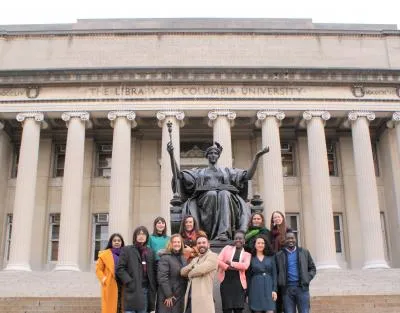
The AHDA fellowship allows participants to come to spend the fall semester of the academic year at Columbia University in New York City. This comprehensive program provides fellows with the opportunity to hone practical skills in fundraising, advocacy and leadership; to develop a deeper understanding of and engagement with the past; and to foster mutually beneficial relationships with their peers and with international and non-profit organizations based in New York and Washington, D.C.
Seminars and Workshops
Over the course of the semester when the fellows are in residence at Columbia, they attend a series of 2-hour sessions with scholars and other experts in historical dialogue, exploring major theoretical issues and on-the-ground case studies.
Seminars are supplemented by capacity building trainings in skills important to the work of historical dialogue, and important to implementing a successful project. These workshops include sessions on fundraising, advocacy tools, new media, and project development. The goal of these workshops is to build capacity in a wide range of skills required for historical dialogue, from facilitation to fundraising.
Networking & Collaborations
Fellows have the opportunity to meet with a range of international institutions, human rights organizations, foundations and practitioners in the field who are based in New York City, to observe their practices, learn more about their strategies, and to meet their leadership and staff. There are also visits to relevant sites of memory in New York City, and to learn more about their programs, outreach and organizational approach. These opportunities enable fellows to build networks with historical dialogue leaders, and connect with individuals and organizations relevant to their work. Additionally, fellows travel to Washington, D.C. to take advantage of the networking and advocacy opportunities available there. Fellows meet in groups and individually with relevant organizations, foundations, museums, universities and government agencies.
Individual Projects
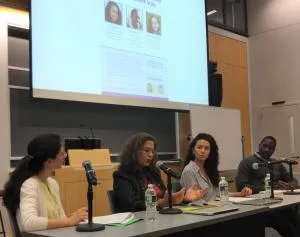
During the fellowship participants design a project that addresses some aspect of a history of gross human rights violations in their society, country and/or region. Projects can take a range of forms (films, publications, curricula, reports, meetings/proceedings), with the aim of implementing them when fellows return to their home communities. Fellows will give several presentations related to the topics of their project proposals and other work that they are engaged in to members of the Columbia community and the larger human rights community in New York City. By the end of the semester, each fellow is expected to have completed a detailed proposal and budget narrative for a project in historical dialogue to a panel of fellowship reviewers, for critique and feedback.
Historical Dialogues, Justice, and Memory Network
The Historical Dialogues, Justice, and Memory Network is the first interdisciplinary global network for scholars and practitioners working in historical dialogue. If you would like to become more involved in the Network, please contact us at [email protected].
Mapping Historical Dialogue Project
The challenges advocates of historical dialogue face are to transform the history of a conflict from a liability to a resource in conflict resolution — to imagine the engagement of the memory of past conflicts as an opportunity to develop mechanisms of acknowledgment and reciprocal recognition.
This mapping seeks to visualize projects that engage in this work. The map relies on a crowdsourcing model that enables users to report on work being done in the field. Find more information here.
Political Apologies Archive
Political apologies can be a powerful tool in the re-examination of a nation's history, and the significance this history has on democratic processes. The project includes a working list of political apologies throughout history that political scientist Graham Dodds has researched and compiled. Click here to read more.
Conferences
Every December, the Historical Dialogues, Justice and Memory Network held a multi-day conference that brings together scholars and practitioners who work in the field of historical dialogue. These individuals have the opportunity to present their projects, scholarly papers, and case studies. The conference provides a space for networking, opportunities to share knowledge and experiences, and establishes AHDA’s identity as a forum for historical dialogue. As an annual event, the conference is also used to explore different topics and challenges within the field, and to reach out to a wide cross-section of practitioners and scholars working in the field.