
From Conviction to Impact: How HRAP Shaped My Journey as a Human Rights and Environmental Leader
2008 Advocate Peter Gayflor Mulbah reflects on how his time a the Human Rights Advocates Program transformed his understanding of advocacy.
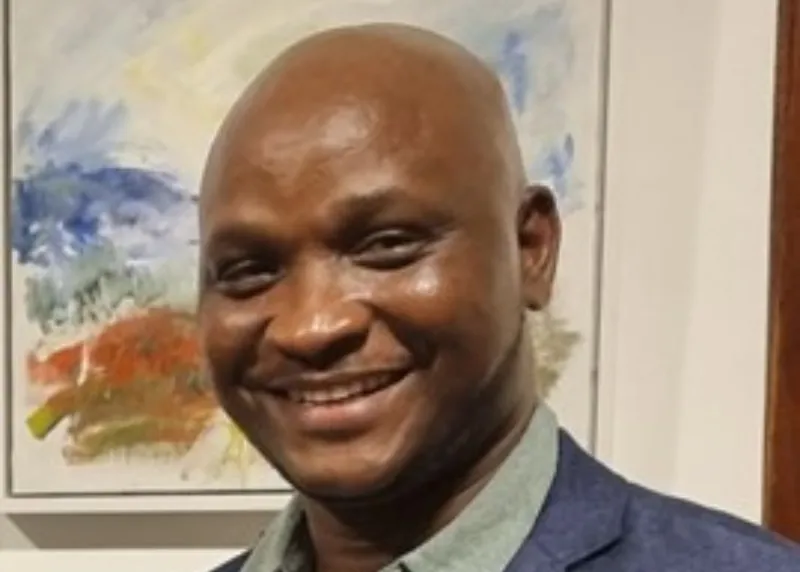
My name is Peter Gayflor Mulbah, a Liberian and graduate of Walden University in the United States, where I earned a Doctoral Degree in Public Policy and Administration. While my academic and professional achievements have shaped my career, the values that define who I am today were formed much earlier through my father's influence. His compassion, courage, and unwavering commitment to justice laid the foundation for my lifelong dedication to human rights, public service, and social change.
I grew up in northwestern Liberia as the eldest son in a family of eleven children: two boys and nine girls. Although our family faced many challenges, I was fortunate to be raised by a father who believed deeply in helping others. He opened his heart and home to people experiencing hardship, often sharing what little he had with vulnerable individuals and families. Looking back, I realize that his greatest gift was not material assistance but the example he set for his children. Through his actions, he taught me that every person deserves dignity, respect, and compassion.
My father possessed a profound sense of justice and never remained silent when people were mistreated or exploited. He often stood up for vulnerable individuals despite the personal risks involved, teaching me that true leadership is not defined by authority or status, but by the courage to defend fairness, dignity, and the rights of others. These values became the foundation of my personal and professional journey.
While studying at the University of Liberia, I became increasingly aware of the challenges facing women, youth, and marginalized communities. Motivated to make a difference, I founded Skills and Agricultural Development Services, a civil society organization focused on capacity building, livelihood development, and rights-based advocacy. What began as a student initiative grew into a respected organization serving communities across Liberia. This experience later led to my appointment as National Coordinator of the Environmental NGOs Coalition of Liberia, where I worked with civil society, government institutions, local communities, and development partners to advance environmental protection, community rights, and natural resource governance.
Despite my passion for work, I gradually recognized a significant gap in my professional development. Much of my advocacy was driven by personal conviction and practical experience rather than formal human rights training. I wanted to become more effective in influencing policy, building partnerships, and addressing increasingly complex development challenges. This realization led me to apply for the Human Rights Advocates Program (HRAP) at Columbia University in 2008, a decision that would profoundly influence both my life and career.
Arriving at Columbia University was both exciting and humbling. For the first time, I joined a diverse community of human rights practitioners and advocates from around the world. These interactions broadened my perspective and encouraged me to think beyond local realities, considering how international approaches and best practices could be adapted to Liberia's unique context.
HRAP transformed my understanding of advocacy. Before entering the program, I viewed advocacy primarily as exposing injustice and demanding accountability. While these remain essential components of social change, HRAP taught me that sustainable progress requires much more. Effective advocacy also depends on evidence-based analysis, constructive dialogue, collaboration, and practical solutions. I learned that lasting change is often achieved by building consensus among diverse stakeholders rather than relying solely on confrontation. This lesson fundamentally reshaped my approach to leadership and advocacy and continues to influence how I engage with communities, institutions, and policymakers.
Another defining aspect of my experience was my engagement with the Earth Institute at Columbia University. Coming from a country where conflict, weak governance, and unsustainable resource use have adversely affected both people and the environment, I was eager to better understand the relationship between environmental sustainability and human well-being. Through discussions and interactions with leading experts, I gained valuable insights into environmental justice, climate governance, and sustainable development. Equally impactful were the relationships I built with fellow participants. As a member of the 2008 HRAP cohort, I was particularly inspired by Dr. Roger Luhiriri and Anbu Sengo Arasi, whose work in marginalized and impoverished communities across Africa and India broadened my perspective on human rights advocacy. Our shared values and commitment to social justice fostered a lasting friendship that has endured long after the program. Today, we continue to exchange ideas, support one another’s work, and maintain an active professional connection through platforms such as Facebook and LinkedIn.
This experience profoundly shaped my professional outlook. I came to understand that environmental protection and human rights are deeply interconnected. Environmental degradation disproportionately affects poor and vulnerable communities by threatening their livelihoods, health, and future opportunities. Recognizing this connection strengthened my commitment to advancing both environmental stewardship and social justice.
When I returned to Liberia, I brought back far more than knowledge. I returned with greater confidence, broader perspectives, stronger professional networks, and a renewed sense of purpose. The experience opened doors I could never have imagined as a young boy watching my father help those in need. It enabled me to represent civil society on Liberia's delegations to international forums under the United Nations Multilateral Environmental Agreements (MEAs) and ECOWAS, and to serve as the first volunteer team leader supporting Liberia's REDD+ Readiness Preparation Proposal, promoting transparency, participation, and equitable benefit-sharing.
My affiliation with HRAP further transformed my journey. Through its network, I was selected for a one-year complimentary membership in the Clinton Global Initiative (CGI), where I engaged with global leaders, including former U.S. Presidents Barack Obama and Bill Clinton. These experiences helped pave the way for my selection to the Kinship Conservation Fellows Program and the Beahrs Environmental Leadership Program. Looking back, I measure success not by titles or achievements, but by the opportunity to serve others and contribute to positive change. HRAP gave me the knowledge, confidence, and perspective to turn passion into impact and conviction into meaningful action.
Today, I remain committed to advancing the rights of vulnerable populations, empowering marginalized communities, promoting environmental stewardship, and supporting inclusive and sustainable development. Looking back, HRAP was a transformative turning point that broadened my worldview, strengthened my leadership and advocacy skills, and deepened my commitment to social justice. Most importantly, it reinforced a lesson first taught by my father: that meaningful and lasting change is achieved when compassion, courage, humility, and service are brought together in pursuit of a more just, equitable, and prosperous society.