
Student Highlight: Seojoon Kim (Joon)
Read our conversation with HRSMA Student Seojoon Kim (Joon)
In which program are you enrolled and when is your expected graduation date?
I am an M.A. candidate in Human Rights Studies at Columbia University, and I expect to graduate in February 2027.
What is your research focus? What drew you to this particular issue/set of issues?
My research focuses on human rights law, international criminal justice, and the gap between the formal recognition of rights and their practical enforcement. My master’s thesis examines the prolonged failure to enact comprehensive anti-discrimination legislation in South Korea, particularly protections based on sexual orientation and gender identity.
Which class would you recommend to other students interested in the same issues as you?
I would recommend International Human Rights Law. The course provided a strong foundation for thinking critically about how international human rights norms are created, interpreted, and implemented, while also confronting the limitations of international legal institutions.
Where did you grow up? In which countries/areas?
I grew up in Cheongju, Korea, and have since lived and studied in Grenoble (France) Hong Kong (SAR) New York (USA) , and The Hague (Netherlands)
What is a must-read for a human rights student?
“Eichmann in Jerusalem” by Hannah Arendt. Arendt’s examination of individual responsibility, bureaucracy, and the “banality of evil” raises enduring questions about how ordinary individuals and institutions can become implicated in extraordinary violations of human rights.
What has been your favorite moment in the program so far?
Some of the most valuable parts of the program have come from seeing the same human rights problem approached from completely different perspectives.
Can you describe any volunteer or extracurricular experience?
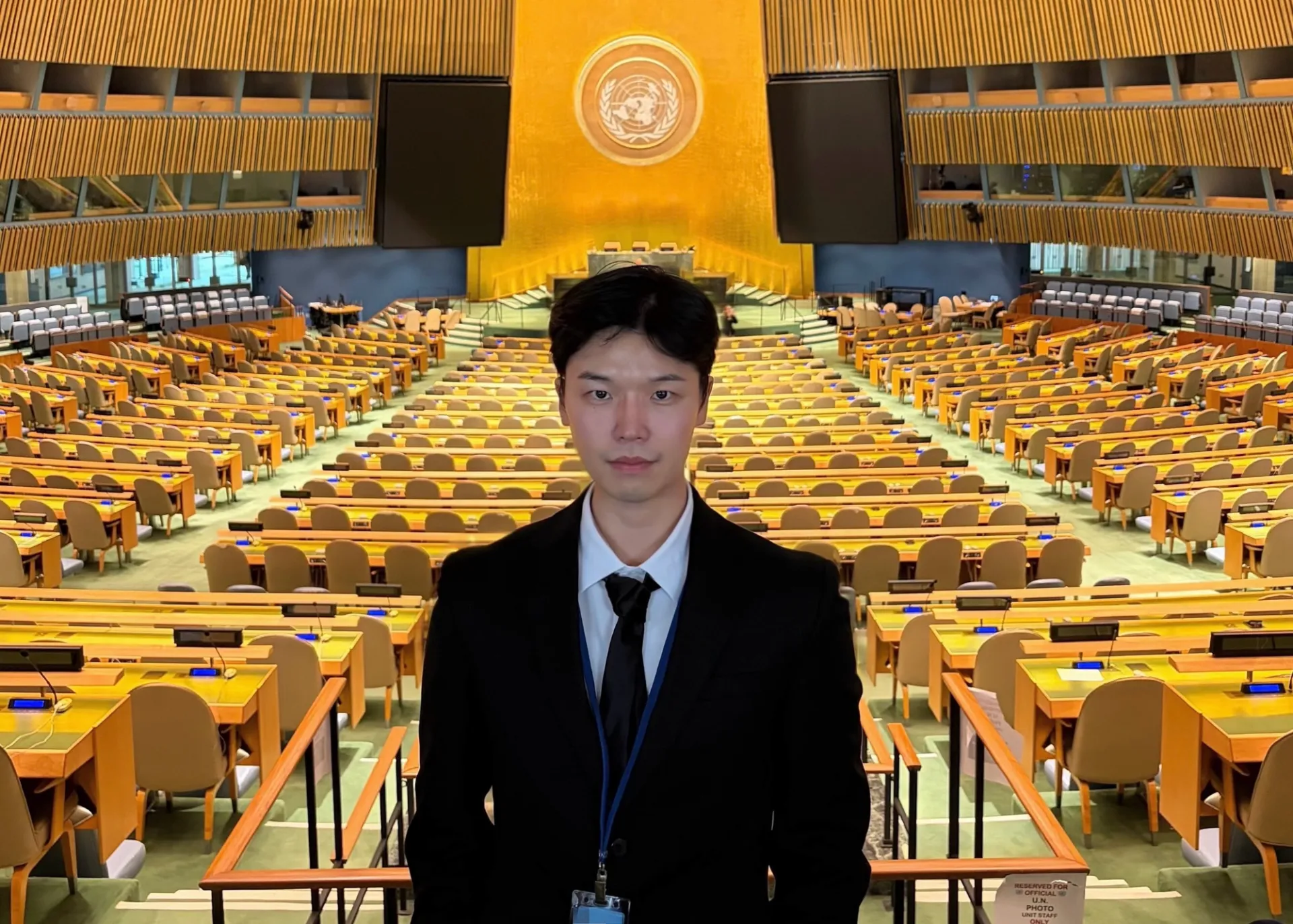
During my time at Columbia, I have had the opportunity to complement my studies with work in international human rights institutions. I interned with the Office of the Victims’ Rights Advocate at United Nations Headquarters in New York and the International Criminal Court in The Hague. These experiences have made many of the questions we discuss in the classroom much more concrete for me.
What are your goals (professional or academic) after graduation? Where do you see yourself in 10 years?
After graduation, I hope to pursue legal training and continue working at the intersection of international human rights law and international criminal justice. I am particularly interested in questions of accountability, victim participation, and access to remedies.
In ten years, I hope to be working as a lawyer or legal professional across domestic and international institutions.
What is your favorite spot to study (or spend time) on campus?
The reading rooms at Butler Library.
What is one thing that your peers would never guess about you?
I used to figure skate when I was younger. I stopped for several years after moving abroad, but being at Columbia gave me the opportunity to get back on the ice through the Columbia Figure Skating Club :)
What is your hometown/area famous for?
I am from Cheongju, South Korea, which is famous as the birthplace of Jikji, the world’s oldest surviving book printed with movable metal type. It was printed at Heungdeoksa Temple in Cheongju in 1377. Interestingly, the only surviving copy is now held by the National Library of France in Paris.
If you were to start a bookclub, which book would you choose? Why?
I would start with Han Kang’s Human Acts. Through the lives of people affected by the 1980 Gwangju Uprising in Korea, the novel explores state violence, human dignity, memory, and the lasting consequences of trauma. What I find especially powerful is the way it moves beyond abstract discussions of human rights violations and focuses on the individuals who experience them and those who are left to remember.
Anything else you wish to share about yourself or your experience in the program/Columbia so far?
One of the things I have valued most about Columbia is the opportunity to move constantly between theory and practice. Studying human rights while working with institutions dealing with many of the same questions has made me more aware of both the possibilities and the limitations of law.