
Student Highlight: Andrew Murgitroyd
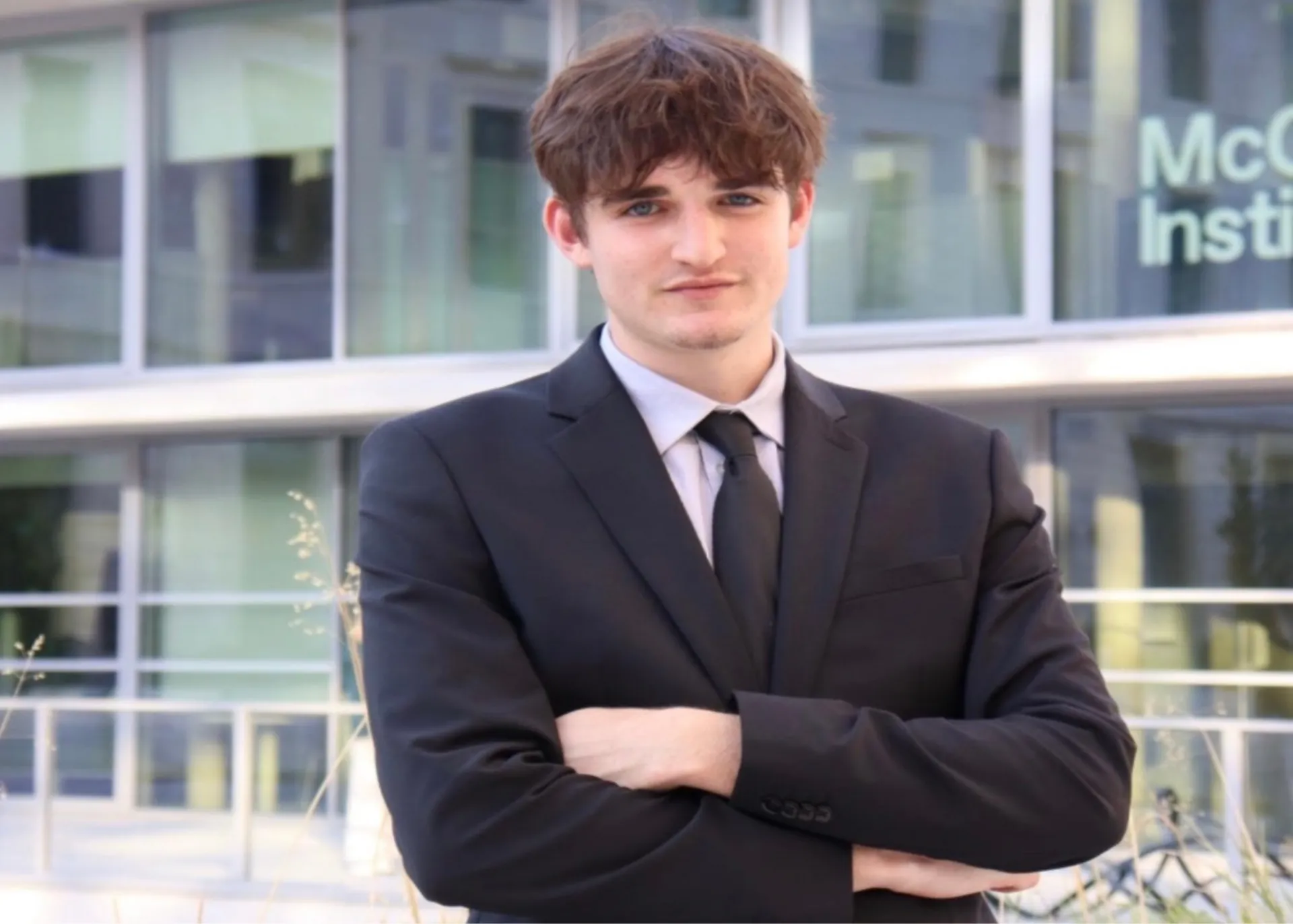
Read our conversation with Andrew Murgitroyd, GS’27 Undergraduate HR Major.
In which program are you enrolled and when is your expected graduation date?
GS’27 Undergraduate HR Major with a Stats Minor; Sciences Po Dual Degree major in Politics and Government.
What is your research focus? What drew you to this particular issue/set of issues?
Originally, a lot of my research focus was on international migration and asylum seeking, looking at transnational applications of refugee and asylum law and the political narratives tied to immigration. Having been born in Scotland, raised in the US, then attending university in France, my life was built on a privilege most people never get to experience – true international mobility. As I began volunteer work with refugee communities in Europe, I was struck by European and North American cognitive dissonance that allowed the world's most privileged to migrate for tax benefits, better education, and job opportunities, while demonizing the unprivileged who migrated for the safety of themselves and their families. The more time I spent studying immigration and working with asylum seekers, the more I became interested in drivers of immigration, and the ways that international development work can mitigate the immigration “push factors” that force people to leave their homes. Thus, my current focus has been on the functioning of local/grassroots NGOs in countries with high emigration, and how the international human rights community can support and sustain work on the ground to allow people to live (and thrive) wherever they call home.
Which class would you recommend to other students interested in the same issues as you?
Post 9-11 Immigration Policy with Elizabeth Ouyang. It was such a fantastic class, and it really explained so much for me about the ways in which American politics around immigration were shaped by 9/11, and the contradictions between what immigration policy purports to do and what it actually does.
Where did you grow up? In which countries/areas?
I was born in Glasgow, Scotland, and was raised in Raleigh, North Carolina. As part of the Sciences Po dual degree program with Columbia, I spent my first two years of university in Reims, France, and I am, of course, now living in New York City while at Columbia!
What is a must-read for a human rights student?
How Migration Works by Hein de Haas, a really good book that breaks down the myths that understandings of immigration are based on.
What has been your favorite moment in the program so far?
My favorite moment in the program so far has been the number of incredible advocates and researchers I have been put in contact with through the ISHR. In particular, my matching with the Institut de Recherche en Droits Humains (IRDH) through the Student Volunteer Program allowed me to make connections with DRC-based human rights advocates, which nuanced my perspective of the global human rights movement and has been critical to my scholarly development.
Can you describe any volunteer or extracurricular experience?
So much of my academic formation has been based on the volunteer work and internships I have been able to take part in. From my time at Sciences Po, I gained experience with European NGOs working to provide food and services to refugees in Corinth, Greece, and with an LGBTQ+ advocacy organization in Reims, France. Back home in North Carolina, I worked with the U.S. Committee for Refugees and Immigrants, and at Columbia I have worked with an immigration legal advocacy organization, as well as a Congolese Human Rights NGO which I was put in contact with through the ISHR’s Student Volunteer Program. All of this work has been critical to my development as a scholar and a person, and has allowed me to nuance the texts and theory read in class with the real-world implications of human rights advocacy and policy.
What has been the most challenging part of the program?
Sustaining hope at a time when human rights appear to be out of vogue and even contradictory to the zeitgeist. Despite this, my courses have made me aware of the incredible work that continues to be done by advocates globally!
What is one thing that your peers would never guess about you?
I kill it at Karaoke.
Anything else you wish to share about yourself or your experience in the program/Columbia so far?
To connect with me, find me on LinkedIn. I would be happy to talk with other human rights students about any of my experiences at Columbia!