
A Note from the Director
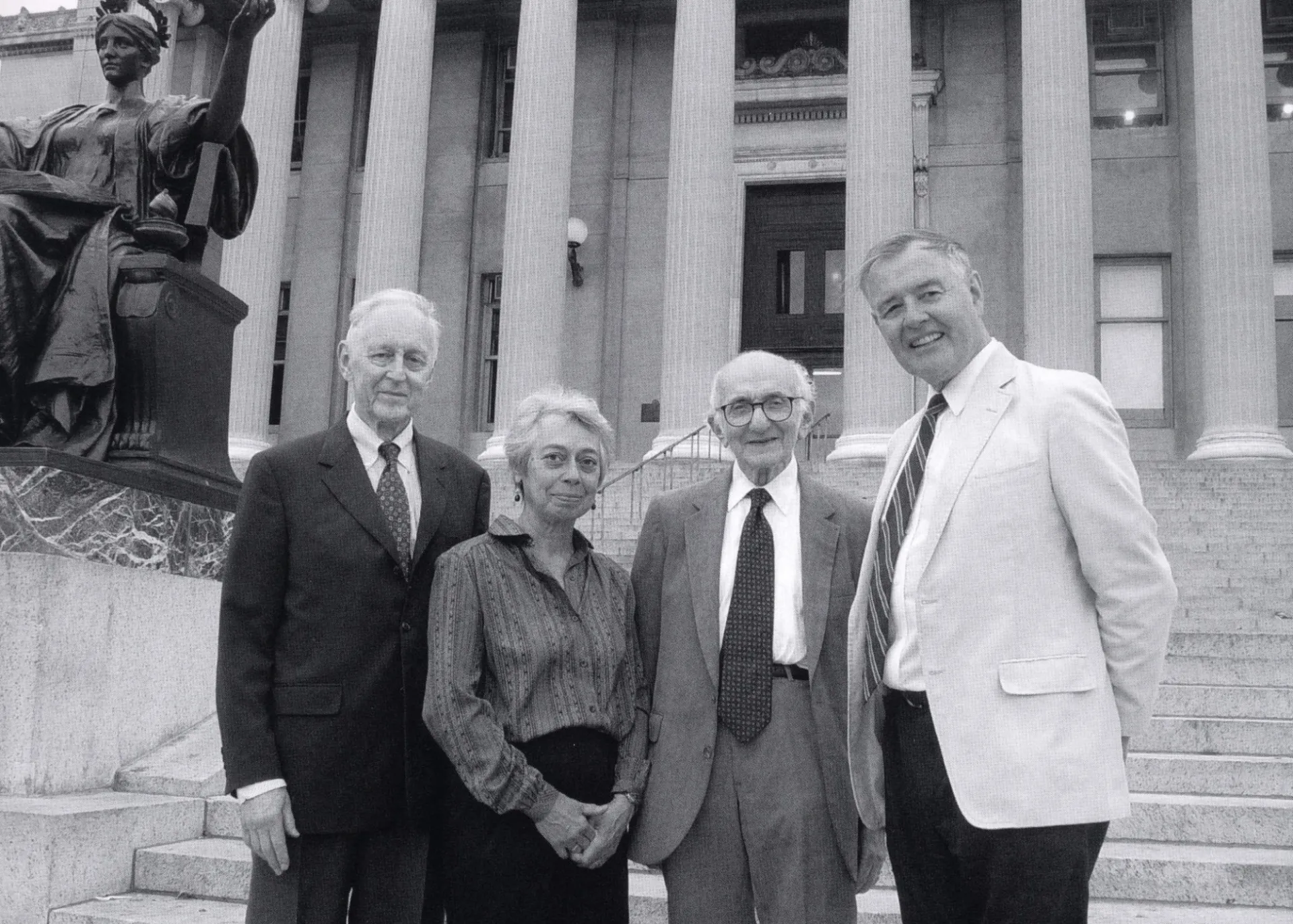
Fifty years ago, a small group of faculty from across the Arts & Sciences and the Law School convened to propose an interdisciplinary center for human rights at Columbia University, which would be the first of its kind in the Western Hemisphere. They secured initial funding from the Ford Foundation and officially opened as the Center for the Study of Human Rights in 1978. Now the Institute for the Study of Human Rights, ISHR will be celebrating its 50th anniversary in the academic year 2027-28.
Much has changed since 1978, both in the world and at the Institute. ISHR now hosts a popular undergraduate major that serves more than a hundred students a year and a world-renowned Master’s program in human rights. Through its Human Rights Advocates program, ISHR has hosted, trained, and learned from more than 360 advocates worldwide, many of whom have gone on to distinguished careers and have been recognized with prestigious awards.
Part of what has changed since 1978 is that human rights issues have come home in particularly pointed ways—to the United States, to Columbia, and to ISHR. In 1978, from the perspective of the U.S., human rights were often understood primarily as problems affecting people elsewhere in the world. Today, the international liberal order that produced the law and language of human rights is itself under immense strain. Within the U.S., the concerted threats to democracy, academic freedom, basic civil and political rights, along with the perennial fragility of economic, social, and cultural rights, make ISHR’s work both more difficult and more urgent than ever.
Among other changes is the saturation of our daily lives by digital technology and the rapid evolution of AI capabilities. For those working in human rights, AI’s growing capacity to facilitate and automate human rights violations becomes a challenge that human rights students, scholars, advocates, and activists will need to confront as part of their work to defend and promote human dignity.
Our efforts this year involve gearing up for reflective programming to celebrate the Institute’s fiftieth anniversary and the vital role it has played in shaping the fields of human rights and social justice. We plan to take long, hard looks at the status of human rights, and of academic work on human rights and social justice, today. We will also honor the work that preceded us, learn from the past, and think about what human rights and social justice work must become to shape a more just future.
At the start of the fall semester we welcome our new cohorts of MA students and undergraduate majors, as well as the Visiting Scholars who are joining us throughout this academic year. You can read more about Benjamin Davis, Michael Katagaya, and Maria Rohani and their projects while visiting ISHR; each of them will be sharing work with us as part of our new Visiting Scholars speakers series.
I also want to extend a warm welcome to four new Columbia faculty colleagues who have joined the ISHR Steering Committee: Naor Ben-Yehoyada, Tara Gonsalves, Turkuler Isiksel, and Alexis Walker. Their knowledge, perspectives, and advice will be of great benefit to ISHR, and to me, in the coming years, and I thank them for their commitment.
We have two exciting events that are rapidly approaching.
On Monday, September 21, ISHR MA alumna Tatiana Kotlyarenko, who recently won the GSAS Dean’s Distinguished Alumni Award, will convene a dialogue with leading human rights practitioners on the challenges of converting advocacy into accountability. Please join us for a timely conversation about the possibilities and limits of human rights and social justice advocacy today.
On Thursday, September 24, we will gather for our annual Welcome Reception. Please join us to meet new and returning members of the ISHR community, reconnect with colleagues, and help us welcome our new students, visiting scholars, faculty, and friends for the new academic year.
Finally, recognizing the challenges presented by large language models and generative AI to human-centered education, knowledge production, and social and personal well-being, ISHR has recently adopted an Institute-wide Artificial Intelligence policy for its classes, coursework, and student theses. You can view it here; we welcome feedback. Given the rapid changes in AI capabilities, the policy will almost certainly evolve. These are challenges we all must confront together to defend and promote human dignity and create a better world.
We look forward to seeing you at our upcoming events.
Joseph R. Slaughter
Director, Institute for the Study of Human Rights