
Advocates in Their Own Words: 2025-26 Advocate Christopher Rutledge on Mining, Dispossession, and the Politics of Solidarity in South Africa
This is the second installment in a series of profiles of the Advocates in our 2025-2026 cohort, written in their own voices. This time we have Christopher Rutledge, Executive Director of MACUA-WAMUA Advice Office (MWAO), a South African non-profit established to support mining-affected communities.
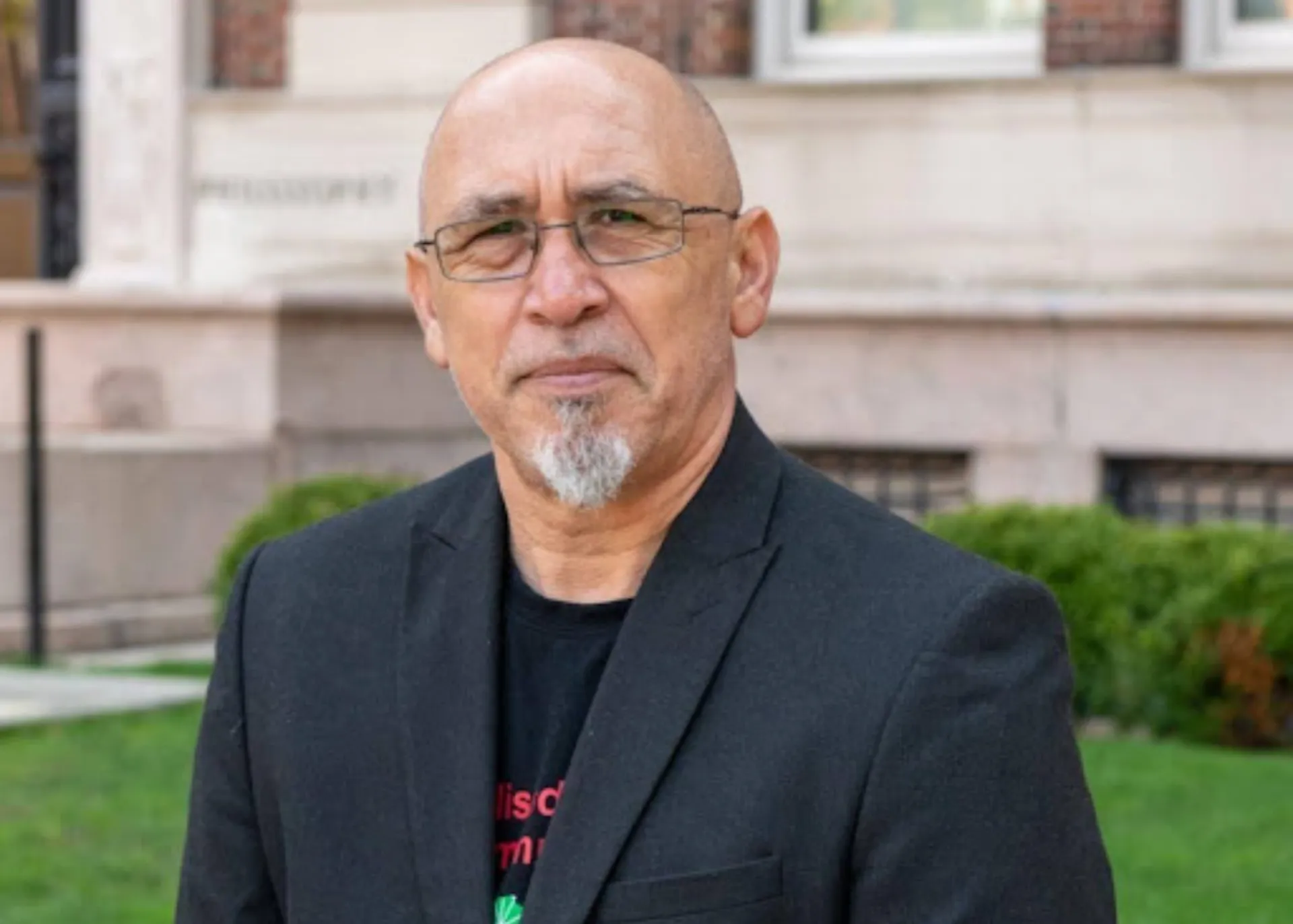
When 2025-26 Advocate Christopher Rutledge speaks about mining in South Africa, he does not begin with an ore body or a balance sheet. He begins with a child sleeping rough on the streets of Cape Town, a 14-year-old arrested with a firearm, and a teenager writing his grade 11 exams from inside Pollsmoor Prison.
The arc from that child to the man now serving as Executive Director of the MACUA-WAMUA Advice Office, a national civil society organization working with mining-affected communities across South Africa, is not a linear progression of upward mobility. It is a study in how political consciousness is forged under conditions that were designed to extinguish it.
Christopher was born into what Apartheid, (the system of state-enforced racial segregation that governed South Africa from 1948 to 1994) classified as a "coloured" community, a category he has since rejected as a tool of division rather than identity. "I view myself as black, even though the pigmentation of my skin is not black," he says. He aligns himself with the philosophical lineage of Steve Biko, the founder of the Black Consciousness Movement, who insisted that "being black is not a matter of pigmentation, being black is a reflection of a mental attitude." For Biko, who died in police detention in 1977, blackness was a political solidarity grounded in shared conditions of dispossession, not a phenotype. Christopher carries that inheritance forward when he insists that the racial categories imposed by the apartheid state were social constructions, engineered to fracture the solidarity that poverty would otherwise generate. However, he is quick to point out that, the trope of blackness is today used to hide the ongoing injustice and exclusion experienced in South Africa where a significant share of South African wealth is held by black elites, yet the conditions of poverty endure. The country's central question, in his telling, is therefore not only racial but irreducibly one of class.
His childhood was shaped by sudden loss. When his father died, his mother was left to raise two boys with little formal education, working as a driver and laborer for wages that could not hold a home together. The family lost their house and drifted. He cites her struggle as a formative influence on how he came to see women and the world. By his early teens, Christopher had moved through shoplifting, gangs, and an arrest that nearly delivered him to the prison system on a firearms charge. The case was dismissed on a technicality. He has described that escape as a defining moment, the kind of narrow passage that allows a different life to become possible.
What followed was political education in the most literal sense. Approached by members of Umkhonto we Sizwe (the armed wing of the African National Congress, abbreviated as MK and meaning "Spear of the Nation" in isiZulu), he was schooled by a political commissar and drawn into school organizing during the final convulsions of apartheid. He was elected to a leadership position on his school's representative structure, campaigned for participation in the national uprising, and was eventually nominated to serve within the United Democratic Front (the broad anti-apartheid coalition that operated inside South Africa during the 1980s while the ANC remained banned). The cost was visible. He hardly attended school between grade nine and grade twelve. The police hunted him. For nearly two years he could not sleep at home, drifting between the houses of comrades and sympathizers. He was eventually placed in solitary confinement, then moved into the general prison population at Pollsmoor (the Cape Town prison where Nelson Mandela was held before his transfer to Robben Island). There he met Govan Mbeki, a co-defendant of Mandela's at the Rivonia Trial, and was tutored in mathematics by a fellow political prisoner who had been arrested for MK activities. He passed his grade 11 exams that year but because of the elongated time spent in detention, he was not able to complete his final year of high school.
The end of apartheid did not deliver the dispensation that Christopher and his comrades had imagined. After serving briefly as the first secretary general of his local ANC branch following the party's unbanning, he watched as people who had spent the struggle years in their houses, hiding suddenly emerged to claim leadership positions. Access to power had become the prize. He stepped away. "I'd never been in it for access to power," he reflects. He took a laborer’s job and rebuilt his education through night school and part-time studies at university, climbing up a corporate ladder that ran from laborer to driver to supervisor to manager to director, then started his own furniture manufacturing and retail business. The trajectory was, on paper, a model of the post-apartheid promise. Yet he came to view it as hollow. While he could employ a handful of people, he could not change the conditions of the majority. He closed the business and turned toward what he calls “living work”, in contradistinction to the “dead work” of corporate accumulation.
The pivot to mining was, in his words, both coincidence and political grounding. In August 2012, the South African Police Service opened fire on striking miners at the Lonmin platinum mine at Marikana (in North West Province, where rock drill operators were demanding a wage rise from R4,000 to R12,500 a month), killing thirty-four men in what was the most lethal use of force by South African security forces against civilians since the Sharpeville massacre of 1960.This was sadly surpassed when the South African state starved 93 artisanal miners to death in Stillfontein in 2024/2025, where Christopher and MACUA played a critical role in saving 250 other black men from the same fate. Reporting by the University of Bristol's Professor David Dixon on the Marikana massacre, notes that many of the miners were shot in the back, and that not a single member of the SAPS has been criminally charged in connection with the killings. But it was the Marikana massacre that saw Christopher attend a conference convened that year to consider how mining impacted on communities, and joined the founding of what would become a national movement, MACUA, Mining-Affected Communities United in Action, alongside its sister formation WAMUA, Women Affected by Mining United in Action, which now spans more than 50 branches.
His analysis of the industry refuses sentimentality. South Africa's mining economy was never simply a national project, he argues, but a Southern African one. Cecil John Rhodes, the British imperialist who served as Prime Minister of the Cape Colony in the 1890s, used the colonial state to enforce hut and dog taxes, levies that compelled subsistence African communities to enter the wage labor system because the taxes could only be paid in British currency. The 1913 Natives Land Act, passed three years after the Union of South Africa was constituted to exclude its black majority, dispossessed Africans of 87 percent of the land, partly to create the conditions in which local African communities could no longer survive by living off the land and would consequently be forced to seek work on the mines. The insatiable need for cheap black labor to work the mines saw the promotion of Migrant labour networks, which pulled men from Mozambique, Zimbabwe, Zambia, and Angola into the Witwatersrand (the gold-bearing reef on which Johannesburg was built). When contemporary South African political rhetoric blames migrants from those same countries for the country's social ills, Christopher reads it as a betrayal of the liberation tradition that recognised the region as a single field of exploitation and a single field of solidarity. Borders, in this account, are colonial impositions and should not determine who counts as part of the South African problem or its solution.
The corruption he describes is not incidental. He traces a structural continuity from the Dutch East India Company through Anglo American to the apartheid-era state-owned enterprises that resolved the so-called "poor white problem" by reserving skilled work for Afrikaners. The settlement reached in the early 1990s, in his account, was negotiated as much in corporate boardrooms as at constitutional conventions. He cites the late Afrikaner economist Sampie Terreblanche, who documented the parallel track of meetings in which South African business representatives, facing American sanctions and a stagnating pool of capital, travelled to Lusaka to extract guarantees from the ANC that property would not be nationalised. Selected ANC figures, including Cyril Ramaphosa, Tokyo Sexwale, and Patrice Motsepe, were recipients of substantial corporate wealth in the years that followed. By 1996, the ANC's democratically adopted Reconstruction and Development Programme had been quietly displaced by the Growth, Employment And Redistribution strategy, known as GEAR, an austerity-leaning macroeconomic framework drafted under the influence of the IMF and World Bank. The decades that followed was, as Christopher describes it, one of jobless growth, in which capital expanded while employment stagnated.
The ANC itself, he notes, has been institutionally entwined with capital through vehicles such as Chancellor House, an investment company whose mining and infrastructure holdings have funded ANC political activity. The result is a system in which business secures opportunities by funding the ruling party, and the ruling party secures the conditions in which business profits.
MACUA's recent three-year social audit of eleven mining companies, published in 2025 under the title "Looted Promises", found that the 11 firms who were audited, had collectively generated profits of 72 billion rand over a five-year period, while spending less than one percent on the community development projects they were legally obliged to deliver. He calls this Crumbs Capture Economy, a system in which even legally mandated entitlements are systematically siphoned away.
The risks are real. One of the MACUA activists, Fikile Ntshangase, was killed in October 2020. Private security firms operating around mines have been linked to criminal syndicates, a finding that emerged from the Madlanga Commission of Inquiry (the Judicial Commission of Inquiry into Criminality, Political Interference, and Corruption in the Criminal Justice System, chaired by Justice Madlanga). The same syndicates, in some cases, simultaneously underwrite illegal artisanal mining operations against the very companies they are paid to protect. Communities, Christopher says, are left to organise themselves under conditions where the state has surrendered much of its agency. To characterise this, he returns to Biko's formulation:” black man, you are on your own”.
His advice to those entering human rights work, delivered at a recent panel discussion at the Columbia Law School, was uncompromising. The field is not a career to dress up for. It is a vocation that requires sacrifice, humility, and constant awareness of one's privilege. "If you can't step back, if you can't be less, if you can't be humble, this is not the place for you. Human rights work requires humility and compassion."
To accept that kind of humility is not a passive act, it places one under an intense moral and emotional pressure that few are prepared to endure. A diamond, he reminds the young person reading this profile, is only carbon made extraordinary by pressure. “Welcome it,” he says. “Let it transform you.”
–
Advocates In Their Own Words is a series profiling fellows and alumni of Columbia University's Human Rights Advocates Program.