
Student Highlight: Chantel Hover
Read our conversation with Chantel Hover, Human Rights Studies MA Student.
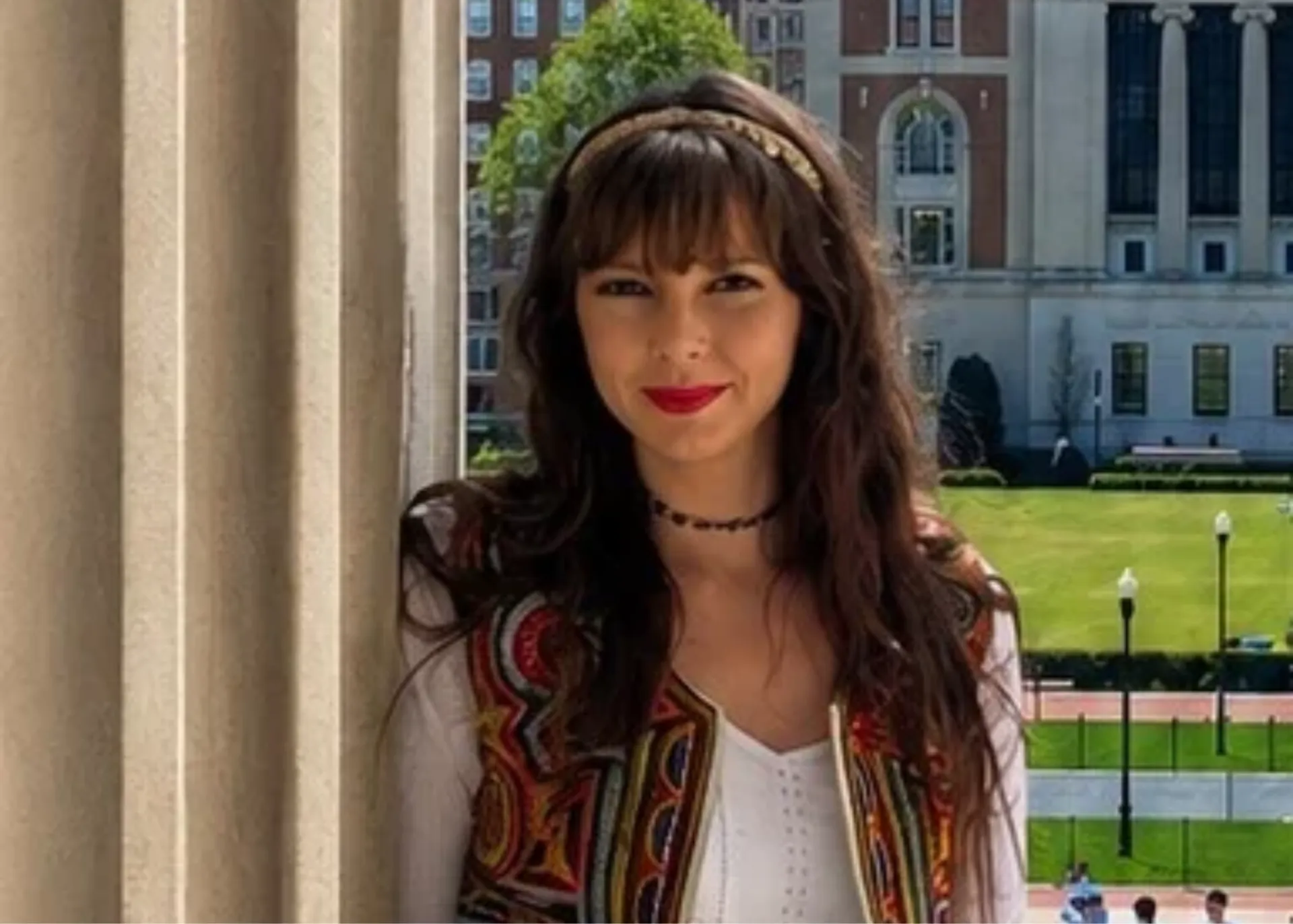
In which program are you enrolled and when is your expected graduation date?
Human Rights Studies MA, Fall 2027
What is your research focus? What drew you to this particular issue/set of issues?
When I first entered the HRSMA program, my research interests were focused primarily on the concept of citizenship and non-citizenship, particularly how citizenship status shapes access to equitable education. Now in my third semester at ISHR, I recognize how my interests fit into the issue of socioeconomic rights more broadly. While I still plan to maintain my original focus on citizenship and education for my MA thesis, my time in the program has sparked a much broader interest in exploring and strengthening socioeconomic rights, both during my studies and beyond.
As a first-generation college student who spent a long time feeling out of place in academia, I think my own experiences and convictions drew me, consciously or not, toward socioeconomic issues. I'm particularly interested in how inequalities are compounded across different communities and countries, and why something as arbitrary as where a person is born or lives can have such a profound impact on their opportunities and access to fundamental rights. This is largely what drives my interest in approaching these issues from an international perspective.
I'm also troubled by the fact that socioeconomic rights are so often treated as secondary to other human rights, and that their enforcement remains particularly challenging. If anything, this only reinforces for me how important it is to focus on them. I think most people want to believe that if they work hard and pursue their goals, they have a fair chance of achieving them. But that possibility depends on having access to the basic resources, opportunities, and protections that socioeconomic rights are meant to guarantee. To me, strengthening these rights is fundamental to making that kind of world a reality.
Which class would you recommend to other students interested in the same issues as you?
This is such a tough question! If I can name more than one, my favorite classes—the ones that have really impacted my research and perspectives–have been Socio-Economic Rights with Professor Jackie Dugard and Data, Race, Power & Justice with Professor Brian Luna Lucero
Where did you grow up? In which countries/areas?
I was born and raised in Port St. Lucie, Florida, which was quite a small town when I was growing up. A trip to Miami when I was 8 blew my mind and convinced me I would be happier living in a big city, so with the special blend of drive and blind confidence that only youth can fuel, I decided modeling would be my easiest and quickest ticket to travel. With luck, I landed a modeling contract at 18 that took me around the world for years, working primarily in Asia, Europe, and across the U.S. When I decided to leave the fashion industry, I moved to Gainesville, Florida and attended college there, then moved to NYC in 2019, where I've lived ever since!
What is a must-read for a human rights student?
Not to sound basic, but actually reading the texts of the UN human rights treaties and major General Comments/Recommendations is so foundational. I think we all have a concept of what human rights are in our heads, but seeing what is specifically written, and how it is written (the specific words used, what is and isn’t said), is incredibly important and informative for any work you do in the field. For anyone, but particularly U.S. students just due to our domestic media exposure, I would also recommend The Jakarta Method: Washington's Anticommunist Crusade and the Mass Murder Program That Shaped Our World by Vincent Bevins. It's an eye-opening examination of U.S. foreign policy and its role in human rights abuses abroad. I think Americans often associate human rights violations with other countries, while viewing the U.S. primarily as a defender of democracy and human rights. This book offers an important opportunity to turn that critical lens inward and examine parts of our own history that are often overlooked or left out of mainstream narratives.
What has been your favorite moment in the program so far?
On a really personal academic level, seeing how well I've been doing in the program has had a huge impact on my self-confidence and excitement for my future in this field. The program is rigorous and requires a lot of critical reflection, so seeing just how much I've learned and how I've already been able to apply that knowledge has been incredibly rewarding!
Outside the classroom/campus, about a third of my cohort and I took a road trip to Pennsylvania this past summer, and it gave me one of the strongest feelings of community and belonging I've ever experienced in/through a school-created group. It's definitely a memory I'll continue to cherish long after graduation!
Can you describe any volunteer or extracurricular experience?
Working full-time while being a student is difficult, but I’ve learned how important (and rewarding) it is to engage with your classmates, program and community outside of the classroom! Highlights of my time so far have included 1) joining the Human Rights Graduate Group (HRGG), which has created easy, low pressure opportunities to connect with classmates outside of the classroom and build deeper friendships through our shared interests and experiences; 2) traveling to Ecuador for a one month internship with the OHCHR (made possible through the support of ISHR summer funding opportunities), allowing me to gain hands-on experience in exactly the kind of work I want to do in this field; and 3) recruiting classmates to join the Afghan Mentorship Program I helped establish at Columbia, which has allowed me to introduce friends to a cause and region I care deeply about and let us connect on a totally different level.
I know this answer is getting long but I want to add- one of my biggest takeaways from these extracurricular experiences has been how it really brings home the truth that your classmates today will be your colleagues tomorrow. Building those relationships now not only makes the graduate school experience more meaningful and enjoyable, but also creates a community of people you can continue learning from, supporting, and working alongside long after your program ends.
What has been the most challenging part of the program?
I think the most challenging part of the program for me has been prioritizing and balancing coursework, opportunities outside the classroom, professional work, personal life, and a schedule that actually works for me and that I can realistically keep up with. Funny enough, I've found the hardest assignments to be the smaller weekly or monthly discussion posts and mini papers! I get so focused on the big-picture stuff (researching and writing final papers, developing my ever-evolving MA thesis) that it sometimes feels way too easy to lose track of the little assignments scattered in between!
What are your goals (professional or academic) after graduation? Where do you see yourself in 10 years?
My dream future post-graduation would be to get accepted into a joint JD/PhD program focused on human rights, and eventually pursue work that supports and strengthens socioeconomic rights. After gaining more professional experience in the field, I'd love to teach at the university level, either part-time while continuing my professional work or eventually transitioning into teaching full-time. That's still a long way off, though, and of course depends on what opportunities come my way!
What is your favorite spot to study (or spend time) on campus?
The library at Teachers College for HRSMA study sessions; the library at Uris for studying alone (I’m one of those people that work better in busy spaces); and curled up in an armchair by a window in the Music & Arts library when I want to escape into a good book!
What is one thing that your peers would never guess about you?
In high school, the only classes I paid attention to were band, drama and dance - I played three instruments, acted in (or played in the orchestra for) all of the plays, and was more focused on trying to become a model than any academic class. I didn’t have the slightest inkling of the academic turn and passion my life would take later, and I love that life my life’s trajectory has and continues to surprise me!
What is your hometown/area famous for?
I don’t think Port St. Lucie, Florida is necessarily “famous” for anything, haha. Maybe the closest thing could be that the Mets Stadium (recently renamed “Clover Park”) is located there, which is the annual spring training home of the New York Mets, so maybe it’s at least famous for/to New Yorkers?
If you were to start a bookclub, which book would be first on your list? Why?
Okay, so I don’t repeat anything from the human rights must-read question earlier, so I would say “Invisible Women: Data Bias in a World Designed for Men” by Caroline Criado Perez. It’s such an eye-opening exploration of how even the most mundane things, and/or things that you wouldn’t associate with gender, are incredibly gendered, and the implications this has not only from a cultural, emotional, and well-being perspective, but also for the quality and rigor of research as a whole.
Anything else you wish to share about yourself or your experience in the program/Columbia so far?
Even within the same university, your experience can vary significantly depending on the people and culture of your department or institute. The environment in which you pursue your education shapes not only your academic experience, but also your sense of community and belonging. I am SO happy to have found the people and culture of ISHR, and so grateful to be part of a community that is as supportive and welcoming as it is intellectually engaging.