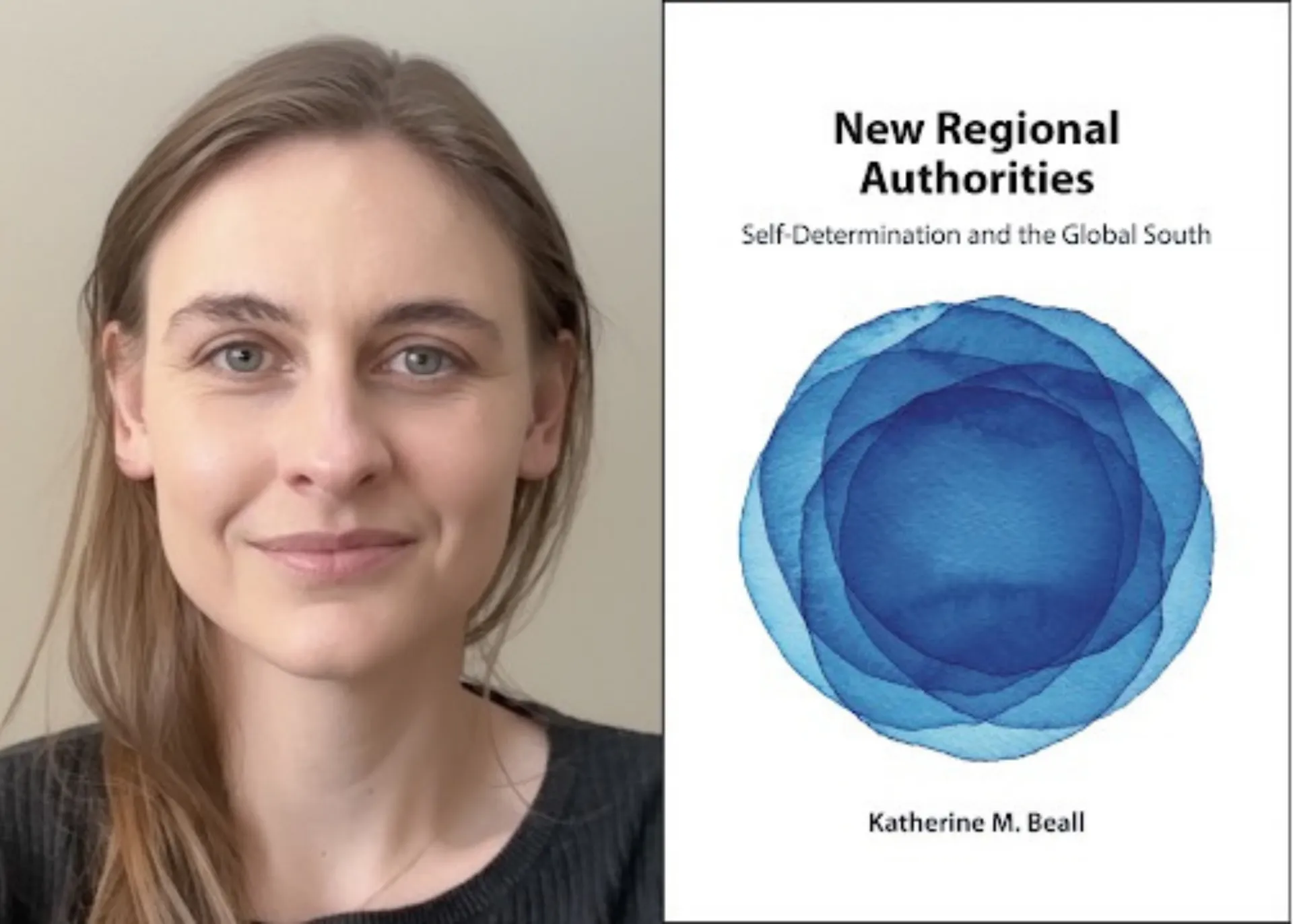
Please share a bit about yourself and the work that you do.
I write and teach about human rights, and my specific interest is in how human rights institutions, norms, and practice have developed over time through contestation between the Global North and Global South.
I just published a book, New Regional Authorities: Self-Determination and the Global South, on this topic with Cambridge University Press. It explores how regional organizations came to be accepted as authoritative actors in the area of human rights, something that wasn't always the case, and which really cuts against the idea that human rights are universal rights that allow for no derogation. I argue that this was the result of strategic efforts by leaders in Latin America and Africa to establish their regional organizations as alternative authorities over human rights as a way of expanding their influence over human rights enforcement in own their regions. One of the main things that I show is that a lot of leaders and activists who genuinely wanted to see improvements in human rights were nevertheless quite ambivalent about it being enforced in ways that denied their societies equal influence. Regional organizations and regional enforcement were seen as a solution to this problem.
What was your research focus during your time at Columbia? What drew you to this particular issue?
While I was doing my Master's at Columbia, my research focused on the responsibility to protect norms, particularly in the case of the 2011 intervention in Libya. I became really interested in how this norm was interpreted and put into practice differently by different regional organizations.
Professor George Andreopolous was my Master's thesis advisor, and he encouraged me to think about this norm, and about humanitarian intervention more generally, not just as a technical solution to a problem, but as a something that is deeply political and contested. Many of the classes I took were also really important in helping me to form my research interests. Those that stand out to me are the classes I took through ISHR on human rights and international organizations and human rights law and ones I was able to take through other departments on post-colonial thought and African regional security institutions.
What else have you done since you graduated from the program?
I began a PhD in Political Science at UC Berkeley after graduating. I completed that in 2022, and since then, I have held positions at Princeton University and Wellesley College, and I am currently a lecturer in the political science department at the University of Massachusetts, Amherst.
What was your favorite spot on campus?
I loved working in the C.V. Starr East Asian library and walking to get a coffee from Joe Coffee on 120th and Broadway.