
Institutional Funding Impact
ISHR’s commitment to providing financial and institutional support, as well as the generous contributions of our donors, have helped alleviate significant barriers to academic and experiential learning opportunities for our students.
To learn about the transformative impact made possible with our funders' support, please visit the Miller Human Rights Award page and the Maurice J. and Fay B. Karpf Peace Prize Award page, which feature more of our students' stories and testimonials.
Shabnam Fayaaz
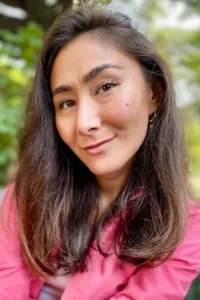
As an Afghan refugee who spent the first years of my life in a refugee community in Pakistan, I understood firsthand the barriers that displacement creates for education, opportunity, and belonging. Yet I also experienced the life-changing power of investment in human potential.
Through Columbia University's Scholarship for Displaced Students, I earned a Master's degree in Human Rights Studies at the Institute for the Study of Human Rights (ISHR), where I deepened my understanding of refugee protection, forced migration, and human rights advocacy. The scholarship did far more than fund my education. It gave me the tools, confidence, and platform to transform my lived experience into a career dedicated to serving others. The knowledge I gained through ISHR, combined with my professional experience, enabled me not only to support refugees through my work at the International Rescue Committee (IRC), but also to help my own family navigate their resettlement journey when they arrived in the United States.
Over the past four years, I have worked alongside refugees and displaced individuals as they rebuild their lives, secure employment, and create opportunities for their families. Through this work, I witnessed both their remarkable resilience and the often-overlooked emotional and psychological challenges that accompany displacement, trauma, and the process of starting over. While many refugees receive support with housing, employment, and other basic needs, I saw that mental health support remains one of the greatest unmet needs in our communities. These experiences have inspired me to continue my education and expand my ability to serve others. This fall, I will begin a Master's degree in Clinical Psychology at Teachers College, Columbia University, with the hope of completing the program within two years and using my training to help address the mental health needs of refugees, immigrants, and other vulnerable populations.
My journey is a testament to what becomes possible when donors invest in education and opportunities for displaced people. Their support does not simply change one’s life; it creates a ripple effect, empowering former refugees to become leaders, advocates, and service providers who strengthen entire communities. Every day, I carry forward the generosity that was extended to me by helping others find safety, dignity, healing, and hope in a new beginning.
Tanya Kotelnykova

Tanya Kotelnykova is the founder and Executive Director of Brave Generation, a U.S.-based 501(c)(3) nonprofit dedicated to equipping the next generation of Ukrainian leaders and changemakers with transformative educational and leadership development to help shape Ukraine’s democratic future and recovery.
I was twice forced to flee my home as a result of Russia’s war against Ukraine: first in 2014, when Russian-backed forces occupied her hometown of Horlivka in Ukraine’s Donetsk region, and again in 2022 during Russia’s full-scale invasion, when I fled Kyiv while completing my law degree. With the support of Columbia University’s Scholarship for Displaced Students, I relocated to New York City to pursue an M.A. in Human Rights at Columbia’s Institute for the Study of Human Rights. During my first semester in 2022, I founded MentorUkraine, a volunteer initiative created to respond to the growing educational needs of Ukrainian youth affected by the war. As the initiative expanded to address broader needs in education, leadership development, and mental health, it evolved into Brave Generation, which has since grown into a registered nonprofit organization with teams working in both the United States and Ukraine. Brave Generation has supported more than 1,000 young Ukrainians since 2022. Participants in its programs have secured more than $26 million in scholarships and educational opportunities and benefited from over $3 million in pro bono services. The organization has received support from institutions including UN Women, the United States Institute of Peace (USIP), the British Council, Razom for Ukraine, and Yale’s International Leadership Center, among others.
After earning her degree from Columbia, I pursued a second M.A. in European and Russian Studies at Yale University, where I served as a Teaching Fellow. Alongside my work leading Brave Generation, I have written on Ukraine, war, and human rights for Foreign Policy, the Atlantic Council, and The Atlantic.
Adanur Nas
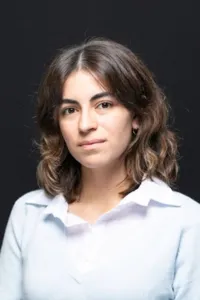
As a first-generation low-income student, I would not have been able to pursue my internship at the International Anti-Corruption Academy in Laxenburg, Austria without the support I received through ISHR’s Maurice J. and Fay B. Karpf Peace Prize. The funding gave me the opportunity to move from studying formal and informal institutions academically to experiencing how an intergovernmental organization operates in practice. As a student interested in human rights, political economy, and institutional accountability, this experience allowed me to connect questions I had encountered in and outside the classroom with the practical work of developing and delivering anti-corruption education for professionals from different institutional and personal backgrounds.
I began the summer break before my junior year at Columbia with an academic interest in understanding how corruption affects institutional trust, human rights, and the conditions necessary for peaceful coexistence. I concluded my three-month internship with a greater appreciation for how challenging it is to put these ideas into practice. I learned that anti-corruption work is not limited to identifying wrongdoings or designing stronger legal frameworks. What is equally crucial is to provide the necessary tools for education, coordination, communication, institutional adaptation, and an ongoing effort to understand the political and organizational environments in which corruption occurs. I strongly believe that this experience will continue to shape how I approach my academic studies and future work in human rights, governance, and international institutions—both for my country and for individuals from lower socioeconomic backgrounds without sufficient resources around the world.